Workshops: Live-Coding Visuals and Sound with Hydra and Strudel
two parallel workshops at display exploring AV live-coding!
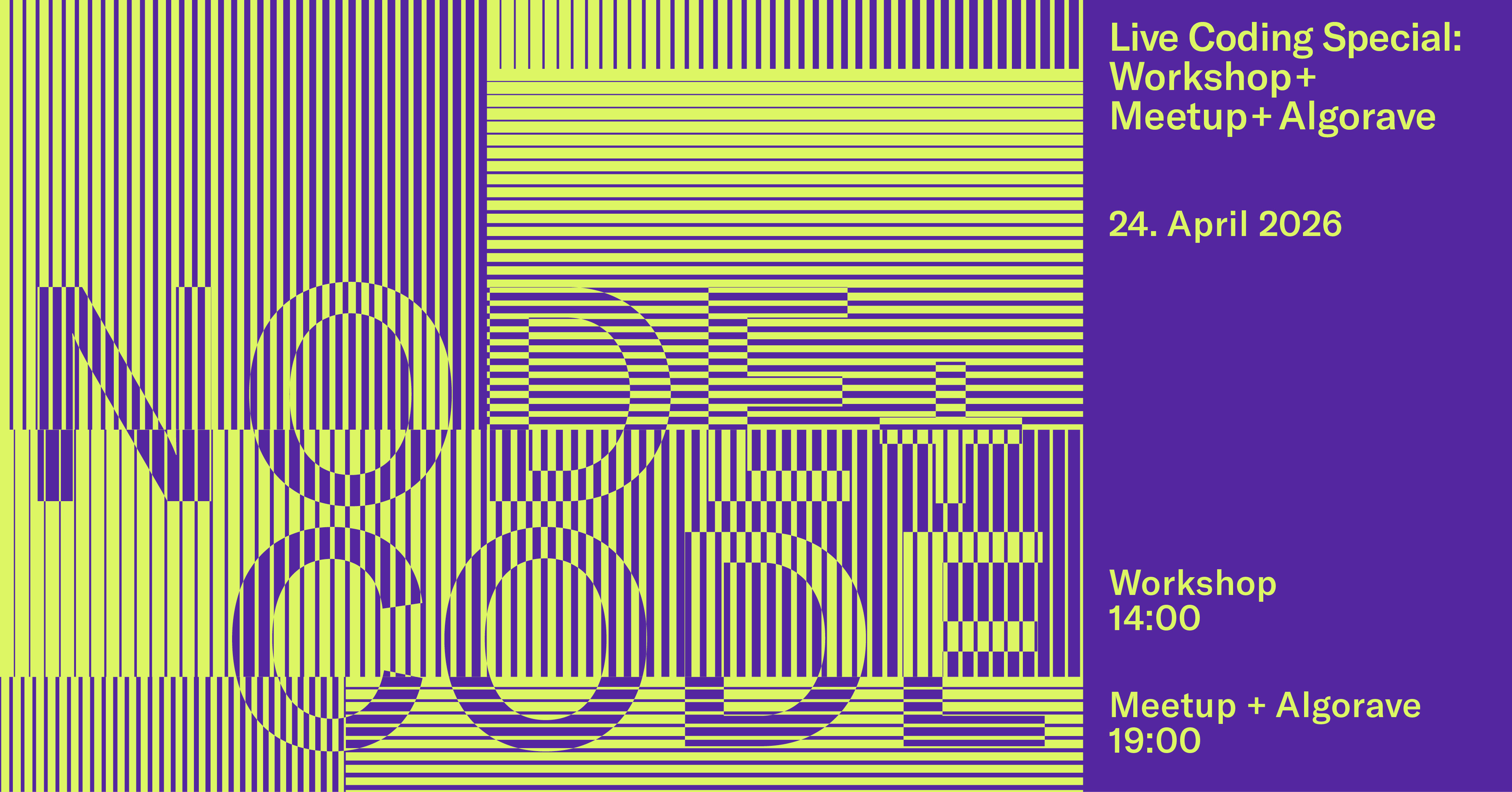
For NODE+CODE #23 AV Live Coding Special we’ll kick off the day with two parallel workshops on live-coding interactive visuals and live-coding sound, which are open to anyone interested. In the evening we’ll have the opportunity to put what we learned into action and join the first display algorave!
WORKSHOP #1
Interactive visuals for live performances using hydra
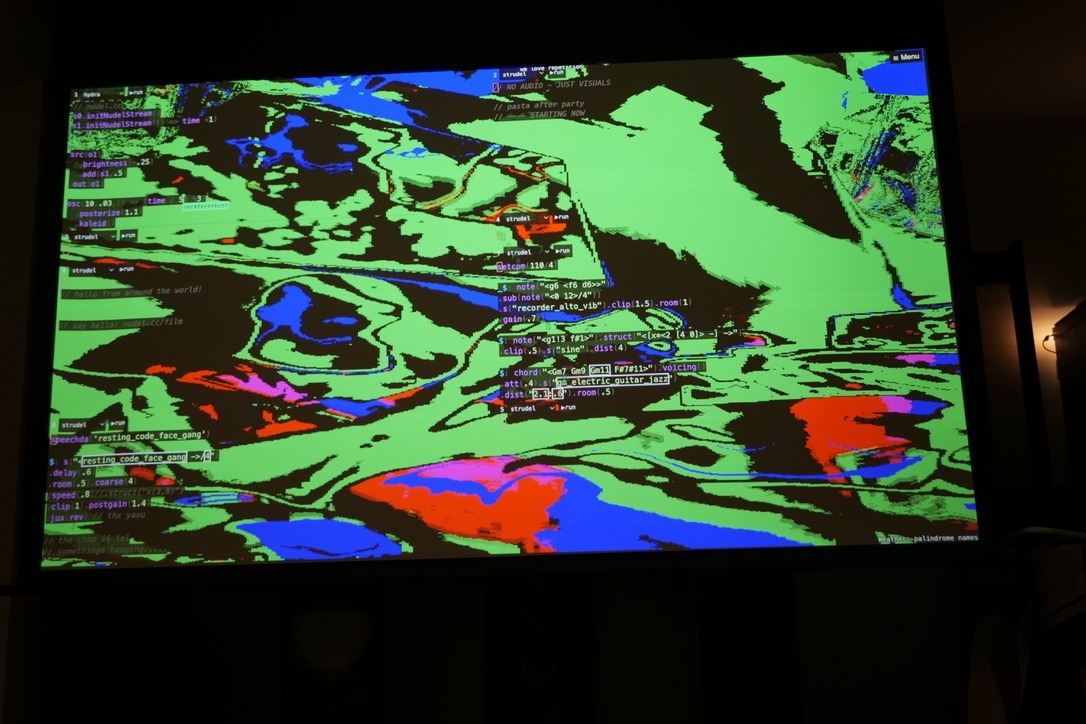
In this workshop, digital-craft artist Flor de Fuego gives an introduction to creating interactive visuals for live performances using Hydra. Hydra is a free browser- and JavaScript-based live coding software developed by Olivia Jack. It is ideal for beginners and allows for the development of interactive visuals with little or no coding experience. Participants will experiment while generating different coded functions, distortion of cameras, audio inputs and mouse events to generate our own interactive visuals.
During the workshop we will dive into Hydra, and experiment while generating different coded functions, distortion of cameras, audio inputs and mouse events to generate our own interactive visuals. Participants will learn to use Hydra and potentialize their own artistic ideas.
WORKSHOP #2
live coding music with strudel
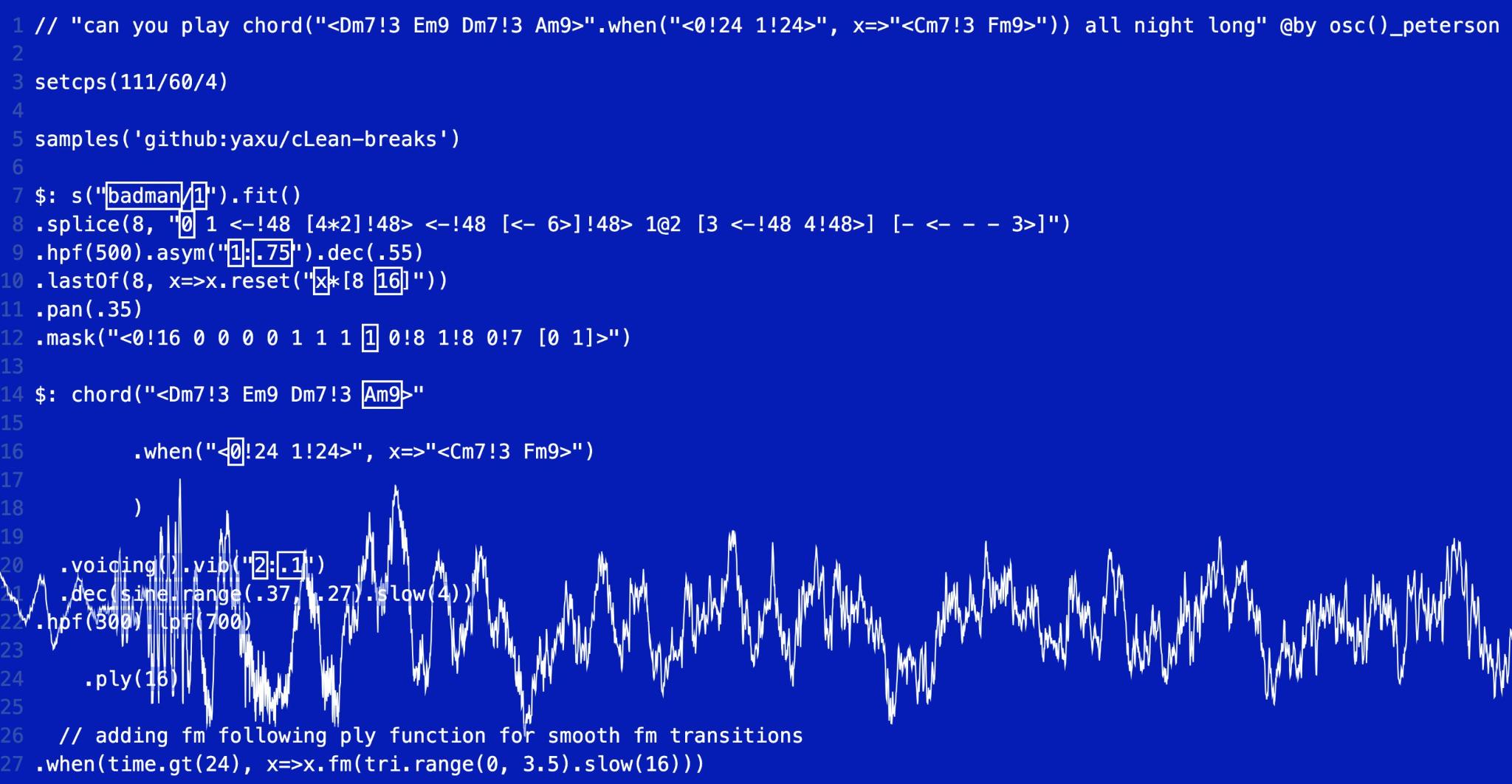
In this workshop, Frankfurt creative coders Tobias Hecker and Felix Roos will introduce the live-coding music composition tool Strudel. With Strudel, you can write dynamic music pieces, directly in the browser. By expressing music as code, you can not only see what is happening at all times, it’s also live changeable and updates in real time. Creating unprecedented spontaneity, your laptop can be an expressive instrument like a guitar, a synthesizer, a sampler or a drum set.
You can create and jam online with others, live, while incorporating other tools as well, e.g. for visuals. We will explore the foundations of the language (“mini notation”) and teach you how to get started. No prior knowledge in programming or music required!
What happens after?
At 7:00 PM, we’ll continue with a meetup, and the workshop hosts—Düsseldorf-based digital artist Flor de Fuego and the Frankfurt team of Tobias Hecker, Felix Roos, and Hannes Güdelhöfer—will present their artistic work, their live-coding tools, and the methods they use with these tools. In addition—despite the innovative content, keeping with good old tradition—there will be a delicious soup served for free.
Finally, the artists, workshop participants, and display invite you to the first display Algorave. Come on by, enjoy, and jam along!
Registration
We offer three types of tickets from which you can choose the one that suits you best – please choose freely! We would be glad if you supported our program by buying a ticket. If you can’t afford the ticket, you are welcome to choose the supported ticket.
Who is the workshop for?
- anyone curious!
- artists, designers
- students in “multimedia” related studies
- people afraid of coding :–) or
- creative coders who are curious and up
for learning something new
What do you need to bring?
- a laptop (Mac / Windows / Linux)
no software installation needed!
Workshop Hosts
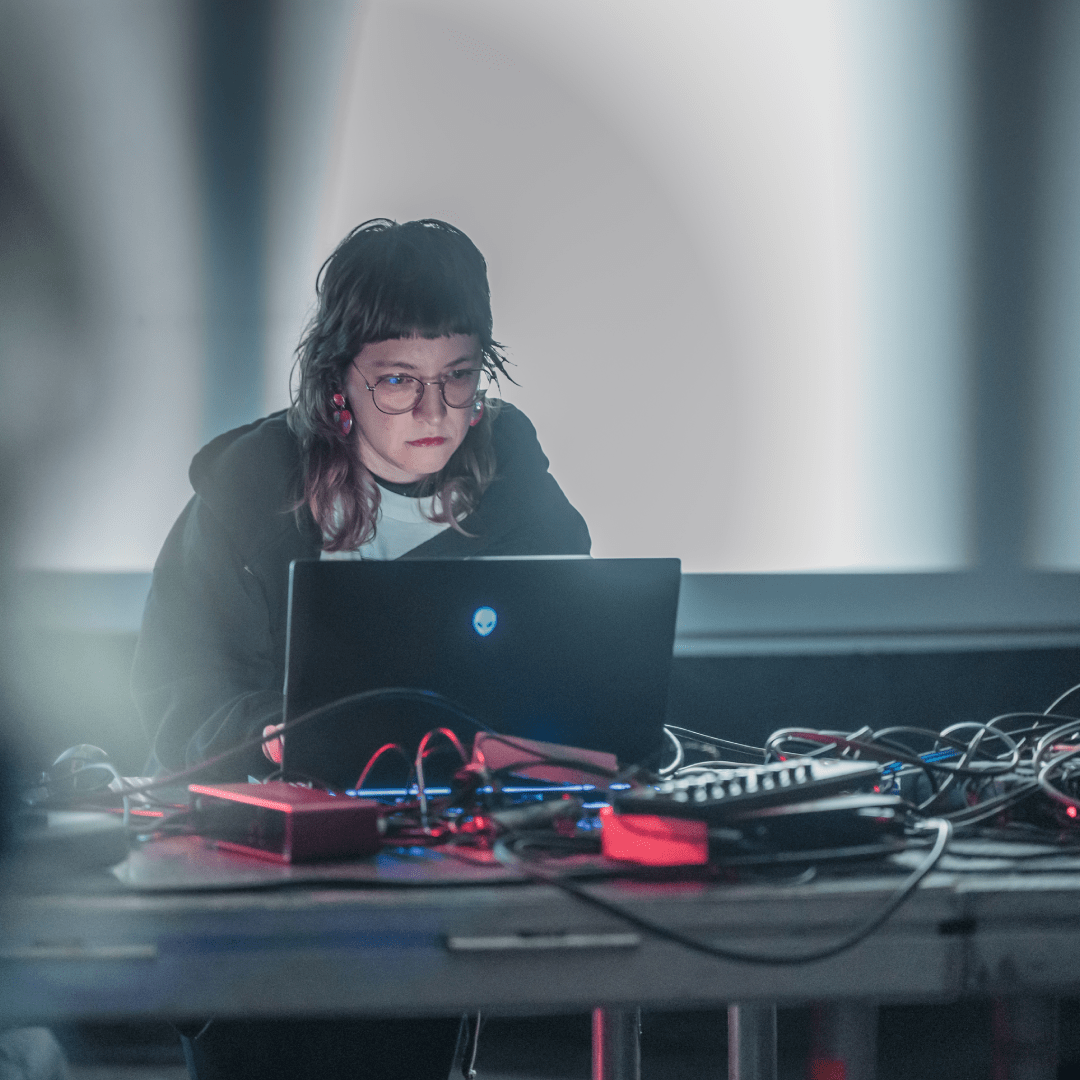
Flor de Fuego
https://flordefuego.xyz/Flor de Fuego (she/her) is a digital-craft artist who primarily works with programming and live coding to create performative experiences. Her research explores concepts such as the body, space, code, and the chaos-cosmos. She holds a Bachelor’s degree in Fine Arts from the National University of La Plata, Argentina. Currently she is studying at Klang und Realität master’s program at the Institute of Music and Media, Robert Schumann Hochschule, Düsseldorf, Germany. Flor is actively involved in the live coding community. She is also an active community collaborator for Hydra, a live coding browser-based software developed by Olivia Jack.
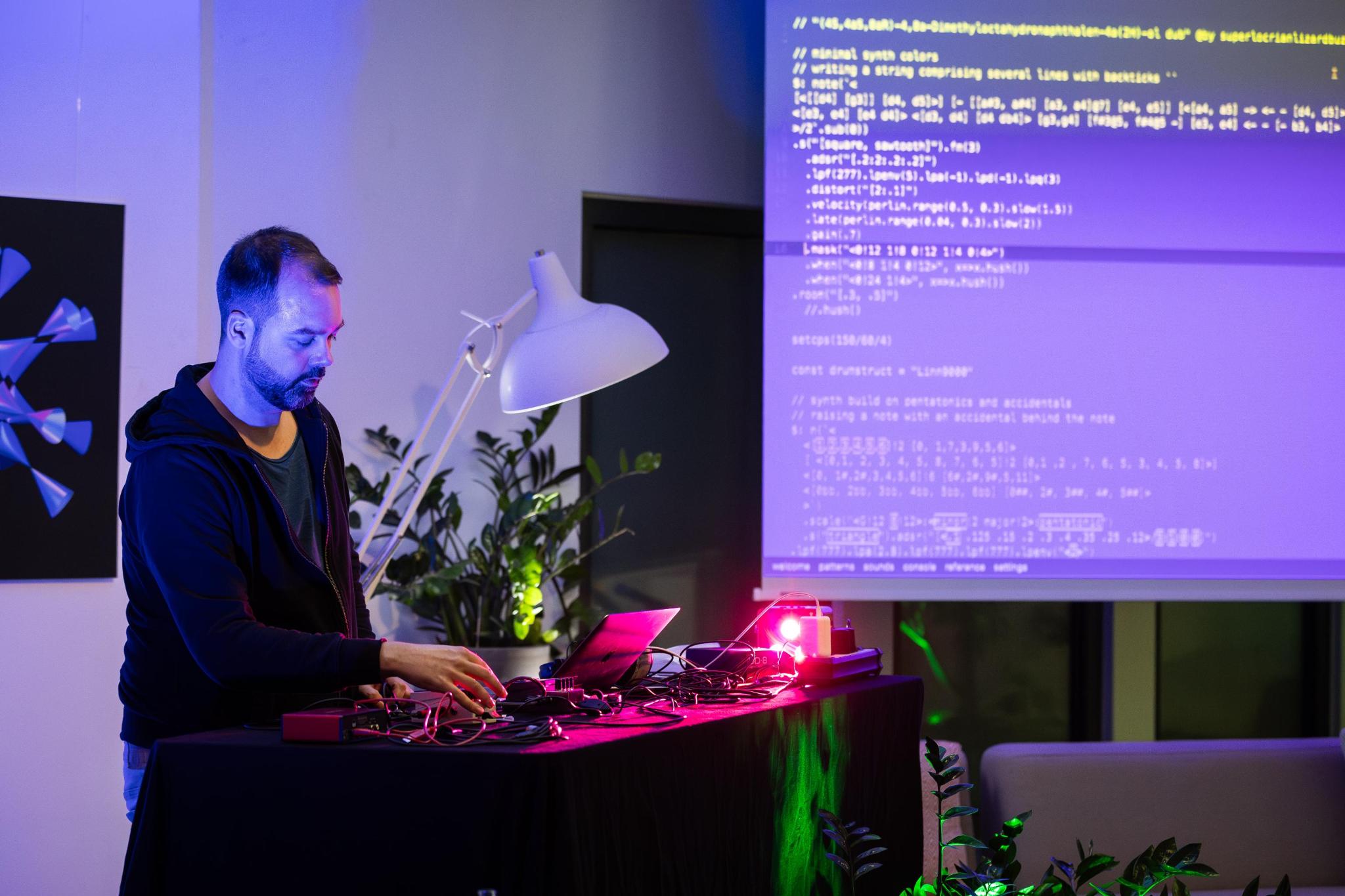
Tobias Hecker
https://mastodon.social/@superdirtspatzTobias Hecker (he/him) writes electronic music using different aliases to explore a diversity of emotional and technical areas. His interest in improvisation and jazz keeps pushing his tracks while his love for effects units adds organic layers. Driven by enthusiasm, serenity, audacity and reverie. Sets might include fm synthesis, breaks, beats, samples, interferences, dub treatments, minimal techniques and birdsong.
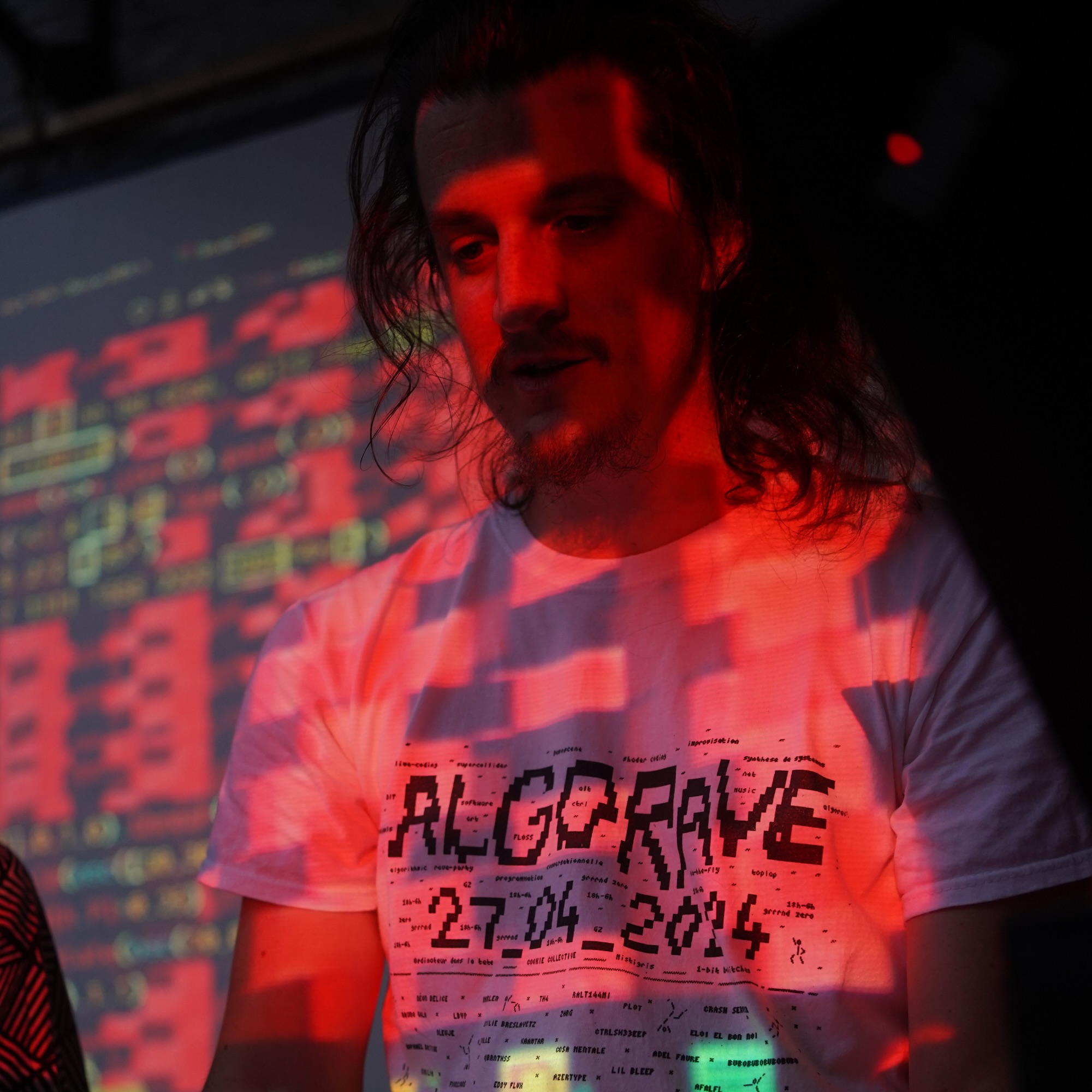
Felix Roos
https://post.lurk.org/@frooseddyflux writes code live to create wonky beats, hypnotic drones and alternate harmonies. Using his pet project strudel.cc, he tries to find ways to make live coded music more accessible for both performers and audiences.

Hannes Güdelhöfer
https://guedelhoefer.dev/A wizard of visuals, Hannes Güdelhöfer explores what is possible with browser based graphic programming. Cells, shapes and recursions are some of his building blocks. His love for live coding music and visuals only gets beaten by his drive to push development of live coding tools.

What is NODE+CODE?
Since 2014, the meetup invites creatives, designers, artists, coders and anyone else interested to a series of events with changing locations and thematic focuses – all related to working with code in design and the arts. We want to build a community of people interested in the creative and critical application of technology in Frankfurt and Rhein-Main.
Open Call
Be part of it and share your projects, challenges and questions with the community in one of our next meetups:
Propose your contribution! [DE/EN]
Funding
The project is funded in the program “Promotion of Cultural and Creative Industries Institutions” by the Hessian Ministry of Economy, Energy, Transport and Housing
In collaboration with

Hosted by