Skip to content
  • N • DE
  • PROJECTS
  • FESTIVAL
  • display
  • Digitale Welten
  • ABOUT
  • SUPPORT US

Tag: artist

Starting from this idea, we decided to showcase three young NODE-related creatives and their take on the ‘Making of: Future’ and took visitors behind the scenes of their projects and thought processes.

Our first speaker of the day, Maria Yablonina, Ph.D. candidate at the Stuttgart University Institute for Computational Design and Construction, presented her ‘collaborative robots’ that build extensive nets using existing architectural framework, reminiscent of large spiderwebs. Maria’s work on this project is ongoing.

Following Maria, David Brüll, of spoke on the importance of working to educate your user on the function of your designs. Speaking on his project with Atelier Markgraph for the Hessian heating systems developer Viessmann, David demonstrated how unveiling the invisible processes of technology helps to include audiences who normally would shy away from interacting with – e.g. – AR technologies.

Our program was concluded by Theron Burger, a media systems designer at MESO and researcher at the University of Hannover. He went further into the subject of the ‘invisible’ tech. He discussed the large distrust that people seem to have towards ‘scary’ tech, versus ‘good’ tech. Theron presented several ideas on how to help people interact with the growing world of technology in an autonomous way.

Thank you!

Accompanying the large number of talks offered by different groups during the day, the NODE information stand informed visitors on upcoming projects, past editions of the festival and the background of NODE and vvvv. We were happy to receive such a large amount of positive feedback for the work that has been done so far as well as to able to get even more people interested in the community that defines NODE.
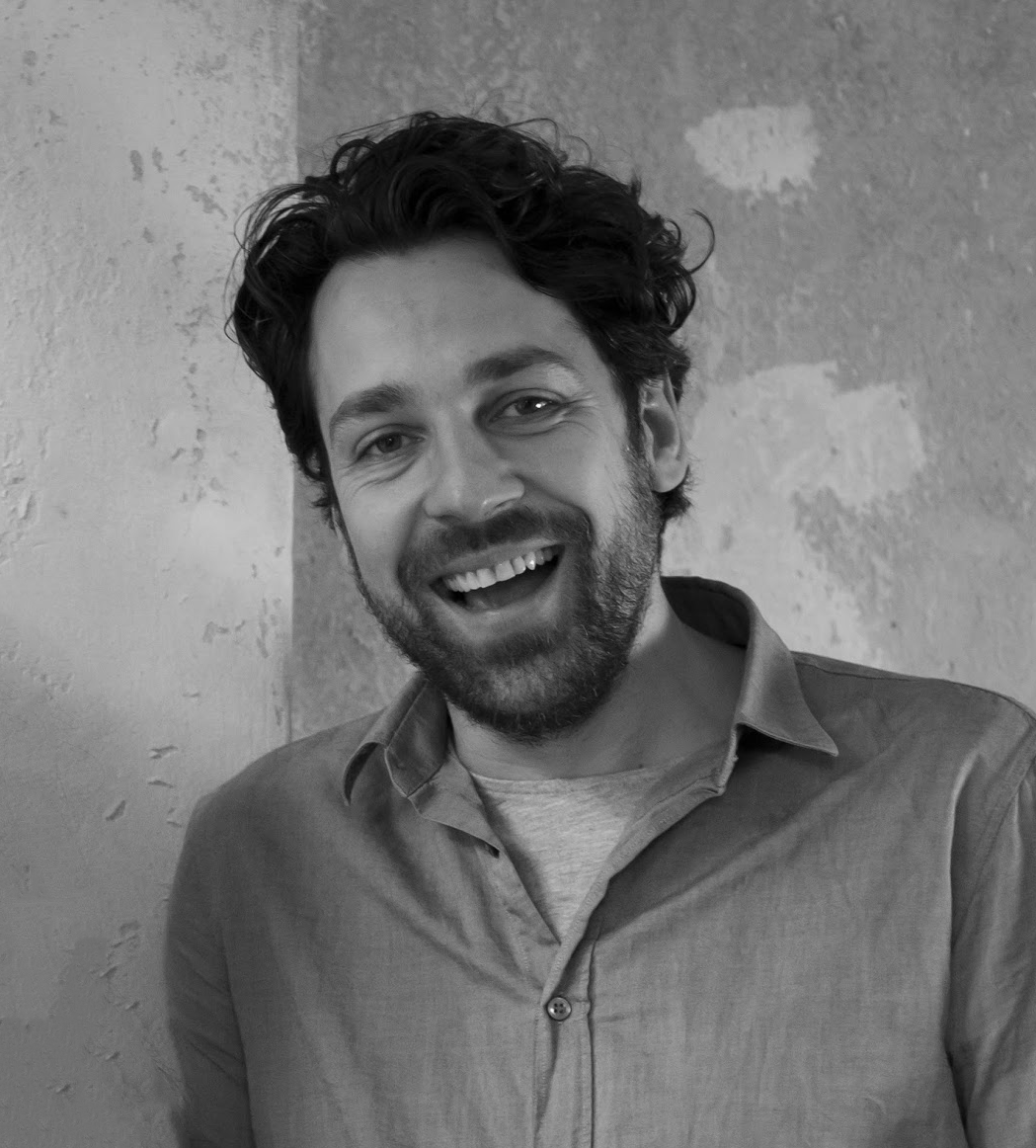
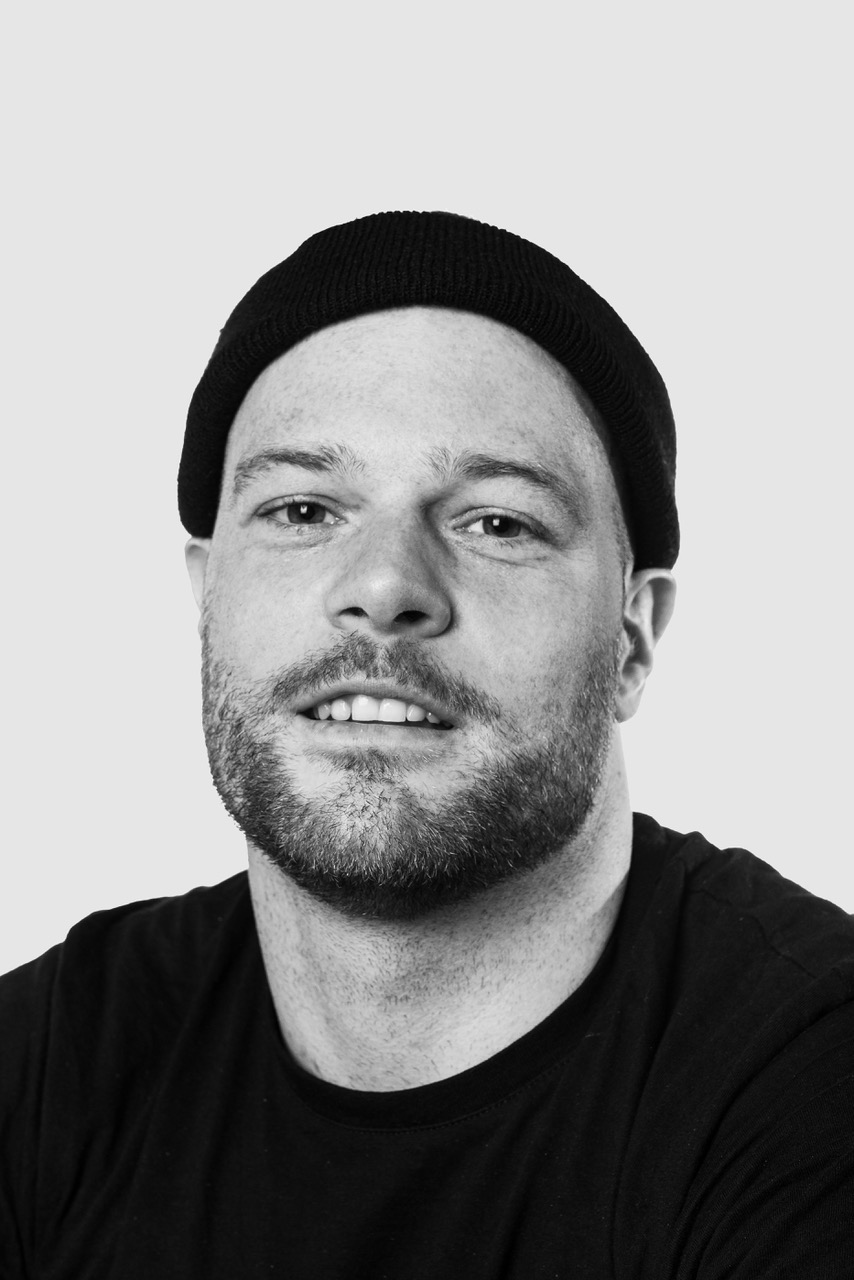
David Brüll

Berlin, Germany

studiobruell.de

David is one of the founders of NODE and shaped NODE to support an innovative and responsible movements within the digital media and design scene by encouraging new collaborations, interdisciplinary interchange and open knowledge sharing. He has been member of the board of NODE until 2024.

Today, David runs both our Berlin activities with NODE institute and Studio Brüll, a studio specialized on interactive installations and media enhances environments. Studio Brüll creates participatory interactive mediations of your ideas and values with applied interaction and experiences design paired with the latest of interactive software and hardware technology.
Maria Yablonina

Stuttgart, Germany

www.mariayablonina.com

Maria Yablonina is a research associate and doctoral candidate at the Institute for Computational Design and Construction at the University of Stuttgart.
​
With a strong interest in robotics and digital fabrication techniques, she is currently focusing on exploring potential fabrication techniques enabled through introduction of architecture-specific custom robotic tools for construction and fabrication. Her work includes development of hardware and software tools as well as complementing material systems.
Theron Burger

Frankfurt, Germany

theronburger.com

Theron’s first memories are of machines. Being fascinated by them, wanting to take them apart, taking them apart (much to the dismay of their owners), eventually learning to put them back together, and building new ones.

In 2008 after studying Industrial Design in Cape Town, he co-founded a robotics school, Rosum Robotics with the goal of complimenting and seeding an inventive practice of learning.

In the intervening years Theron convinced the HKU University of the Arts, Utrecht and the Staatliche Hochschule für Bildende Künste Städelschule, Frankfurt respectively to award a Masters in Interaction Deign and a Masters in Architecture respectively.

He now works between Meso Digital Interiors Frankfurt and The Leibniz Universität Hannover as a researcher in Digital methods in Architecture.
The HOPE Lab Mission

Every other year, the NODE team gets together to design an event. And with every concept we draft, we expect our beloved forum to allow for knowledge transfer, critical exchange and the opportunities to develop collaborative ideas. This is, indeed, quite a demanding task and leads us to perpetually reconsider questions like: Which formats do we suggest as a framework for all these interactions? Whom do we address? How do we allow everyone to get the most possible amount of visibility she/he longs for or deserves in this forum of peers? And repeatedly we notice that during every festival edition, we experience insane amounts of enthusiasm, open-mindedness and productive energy – an energy that catches everyone, triggers some to take home inspirations, new ideas our just increased curiosity. But how can we nurture these wonderful side-effects even more?

When choosing our festival topic, ‘Designing Hope’, we noticed at a certain point that what we are doing – creating a festival – is to design a space and a structure which is indeed an insanely fruitful ground for hope and positive thinking – so we asked ourselves:

How to channel this enthusiasm? Which responsibility do we have, as festival designers? How can we design NODE in a way, that all this energy can actually feed critical or even sustainable action?

During the last month, a team of five amazing artists started working for NODE and being our critical consultants and counterparts – and this is their mission statement:


“The HOPE Lab is an interdisciplinary laboratory prototyping beacons of hope for visual creators and aspiring idealists at NODE Forum in Frankfurt. We are focused on helping realize the NODE community’s greater collective potential to change the world in an era where hope has been co-opted.”


Stay tuned and watch out for #HOPElab activities before and during #NODE17!

The HOPE lab Artists

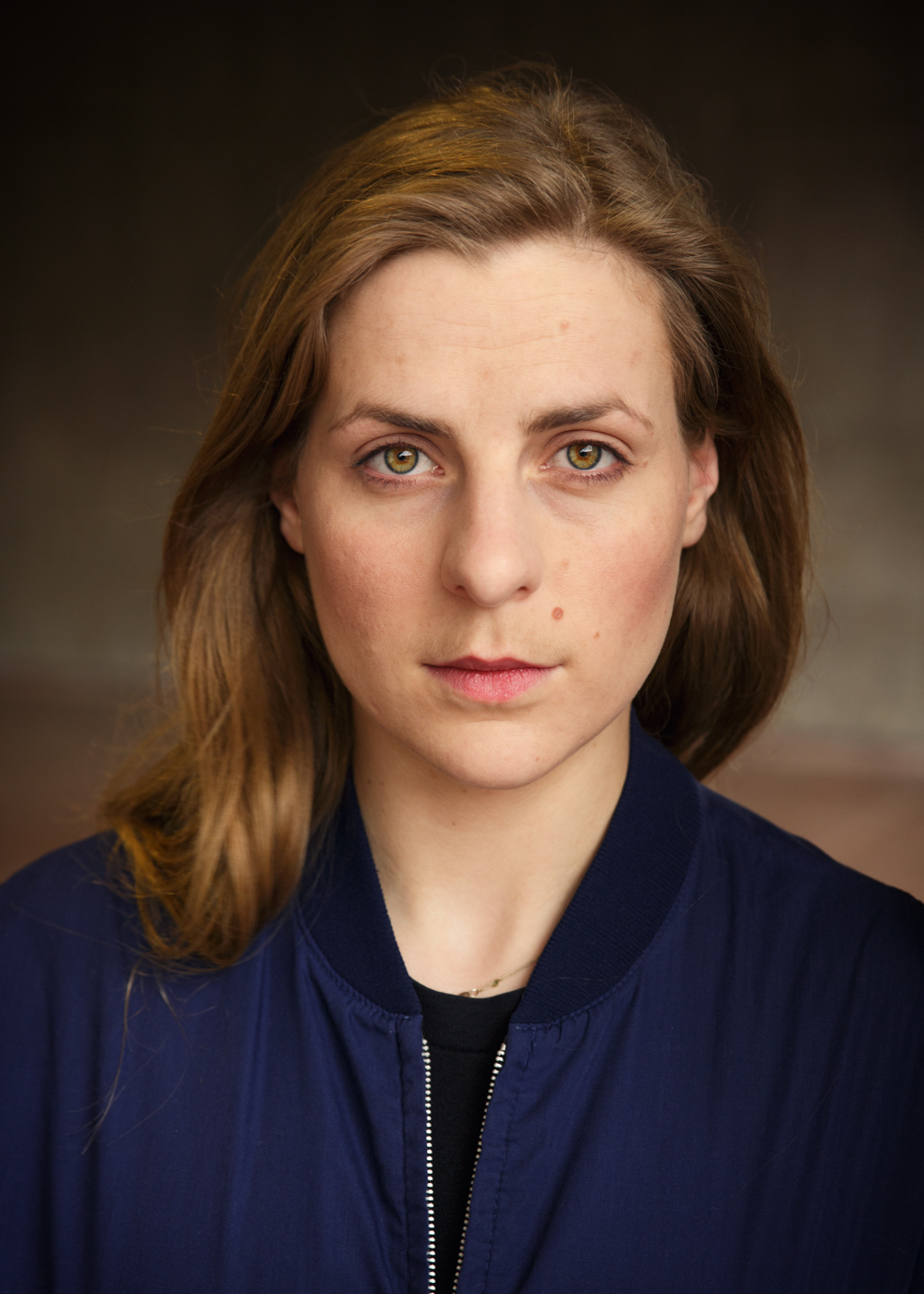
Kathia von Roth

Hamburg, Germany

Kathia von Roth is a Hamburg (D) based artist, activist and social engineer. Since her studies in theatre direction (graduated B.A. in 2013) she has been combining methods of theatrical play and performance with tools of analogue game design. In her work she is setting up physical and/or conceptional formats of temporary ‘utopian zones’ for collaborative creation, from immersive theatre spaces built on fictional storytelling to gamified working structures in the context of festivals, conferences and collective art work. By using the save environment of a game format, she is enabling the “spectators” to bypass the fear of failing and a subservient insecurity to act. In this, she is creating realms of experience that cause alterness and a change of behaviour in its participants and can therefore take effect into so called reality.

In her work, Kathia von Roth is consulting a possible revolution, deeply believing in a post-competitive future.

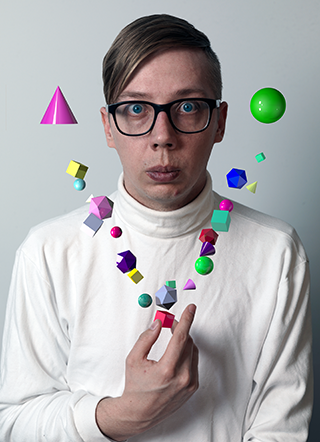
Jeremy Bailey

Toronto, Canada

jeremybailey.net

Since the early noughties Bailey (CA) has ploughed a compelling, and often hilarious, road through the various developments of digital communications technologies. Ostensibly a satire on, and parody of, the practices and language of “new media,” the jocose surface of Bailey’s work hides an incisive exploration of the critical intersection between video, computing, performance, and the body.” (Morgan Quaintance, Rhizome) Recent projects include performances for Rhizome’s Seven on Seven in New York, The Stedelijk Museum in Amsterdam and Tate Liverpool.

His work has been shown widely including recent solo shows at Transmediale in Berlin, and group shows Mediamatic in Amsterdam, Museums Quartier in Vienna and Balice Hertling in Paris. Recent commissions include projects for the Southbank Centre in London, FACT in Liverpool, Turner Contemporary in Margate UK, and The New Museum in New York. Bailey is represented by Pari Nadimi Gallery in Toronto.

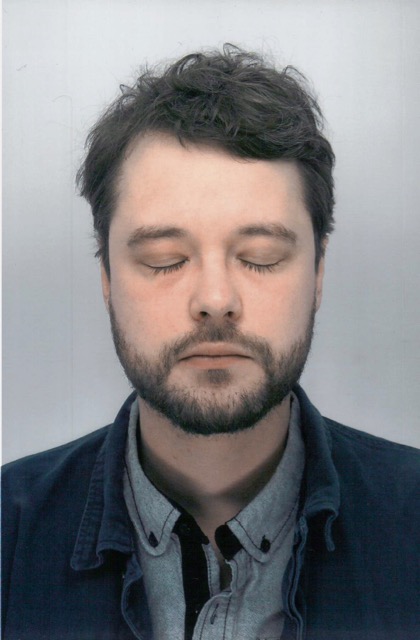
Florian Egermann

Cologne, Germany

fleg.de

Florian Egermann’s (D) work addresses the transformative impact of technology on both a personal and the society level. His objects, performances and installations are mostly devoid of technology, but question the behavioral patterns shaped by it. 

As a member of art groups, he has co-created several participative projects on the borderline of art, activism and social work. He is a founding member of „wielebenwir e.V.“, an association that creates and runs sustainable urban projects.

International performances, exhibitions and workshops („vvvv“, performances), lectures and workshops for sustainable grass-root projects. 

He lives & works as an artist, activist and astronaut in Cologne. 

Lauren McCarthy

Brooklyn, NY

lauren-mccarthy.com

Lauren McCarthy is an artist, programmer and social engineer based in Los Angeles and Brooklyn. In her work she examines the potential of technologies like social media to create positive social interaction. She makes software, performances, videos, and other things on the internet.

Lauren has exhibited at Ars Electronica, Conflux Festival, SIGGRAPH, LACMA, Onassis Cultural Center, IDFA DocLab, and the Japan Media Arts Festival, and worked on installations for the London Eye, US Holocaust Memorial Museum, and the Metropolitan Museum of Art. She holds an MFA from UCLA and a BS Computer Science and BS Art and Design from MIT.

She is an Assistant Professor at UCLA Design Media Arts. She was previously a resident at CMU STUDIO for Creative Inquiry, Eyebeam, NYU ITP, and Ars Electronica / QUT TRANSMIT.

Dr. Felix Kosok

Frankfurt, DE

bureau069.de

Felix Kosok is a design researcher and graphic designer. He received his doctorate in 2020 from the HfG Offenbach on the aesthetic-political dimension of design. In addition to research, he is himself active in design with Bureau069, founded in Frankfurt. Felix Kosok has received many awards for his work. Since 2021, Felix Kosok has been Associate Professor for Graphic Design and Design Theory at the German International University Berlin as well as on the board of the German Designer Club (DDC).

Working Phase 1 – 1. Kreativwirtschaftstag Hessen

The first working session was dedicated to analyzing NODE and social communities in general. In five days, the team met to discuss former festival learnings and feedback they had gathered from interviewing former festival participants.

As a first test field, Kreativwirtschaftstag Hessen was the setting for applying the first prototypes of the HOPE lab hopebeacons.

See some images from their playground at Börse Frankfurt:


This project is made possible by


Tehran, 20. September 2016 – Arriving at the beautiful kooshk residency was already an experience worth to dedicate an own article: driving to the heart of downtown Tehran, we find an oasis run by amazing hosts and a grey grumpy Persian cat called Gombat. The reason for her grumpiness is what makes us feel just the perfect atmosphere: It is a place for coming and going but leaving traces and it is proven by a gallery of not less than 20-30 international artists decorating the walls of the comfy kooshk living room. But what we are actually here for is a venture we are trying already for the second time: bringing together two artist who, at TADAEX, start a collaboration that will take them work on a project for the next year.

TADAEX2016 schedule
A fully packed TADAEX2016 schedule.


In conversation with Lilian and Simon.

TADAEX/NODE 2016/17 exchange

The ‘dumbphne’ performer visiting TADAEX.

Our resident artists Lilian Nejatpour and Simon Weckert had already been working for almost two weeks when the NODE team arrived in Tehran. Both not resident in Tehran, they tell us to have spent the days strolling through the streets, getting to know each other and the place that is hosting them for almost a month.

We find them right in the middle of the hassle to do a video shooting, an exercise that is quite packed with challenges in a place like Tehran. Permissions, it seems, are the most delicate thing to get. For which reason? We are not sure. It is not about privacy issues, that is clear.

The ‘dumbphne’

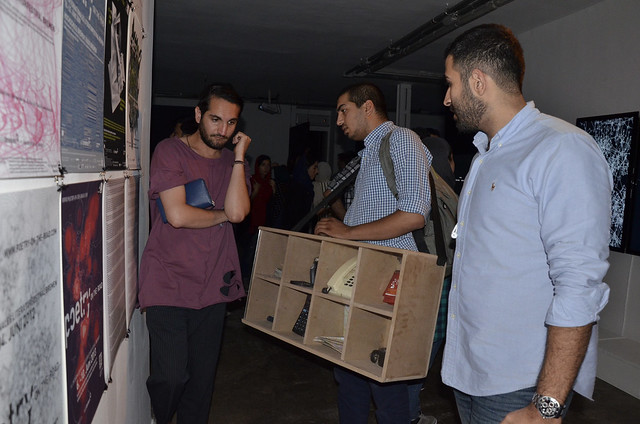
Simon and Lili are working on a video installation and a performance piece that will premiere at TADAEX 2016. Hanging out in the garden of kooshk, they are explaining their ideas and impressions, how they were connecting in the rush of this city, and how they finally found networked and mobile communication and how it is affecting our gestures and relationships globally a phenomenon they were mutually interested in. Their work ‘dumbphne’ is a performance and video piece that is playfully mimicking and exaggerating ways to use tools of a smartphone. The contact list turns into a proper book, the maps app is a classy old map of the Tehran streets, and instagram returns to his aesthetic source: a beautiful analog polaroid camera. The work is exhibited at TADAEX16 in a white cube that is, at the same time, visited by the performer with his ‘phone’ – or rather dumphne. Just as a normal gallery visitor, he looks at other works and takes a photo from time to time.

The ‘dumphne’ will be shown during NODE17, as well.


During the next days, we get to know great young artists and designers who are sharing their knowledge and are craving for the next source of inspiration. We meet curators that use digital means in the most pragmatic and clever ways to create opportunities of international exchange for their audiences. We take part in electronic AV performances that must be enjoyed while sitting. What we can feel is an undeniable quality of connection and complicity in the air – an atmosphere we are looking forward to dive deeper into…

Bonding with the Korintzky Brothers.
Bonding with the Korinsky brothers, two thirds of the ‘Korinsky Atelier für vertikale Flächen’ Sound Collective.

Lilian Nejatpour

Artist

UK / Iran

Lilian Nejatpour (*1994) has recently graduated with a BA in Fine Art and History of Art at Goldsmiths College in London. She is a British, Iranian artist concerned with technology as a mode of evolution that operates through our physical gestures and dialogue.

“It is becoming increasingly visible through overheard conservations that circle around technological invasiveness and sentimentality. I therefore questions how these two very distinct modes operate alongside each other and what problems arise when they are captured and re-situated in romantic conversation. I am delighted to be working with TADAEX & NODE in collaboration with Simon Weckert, to combine and uncover these technological methodologies further in the surroundings of both Iran and Germany.”

Simon Weckert

Artist, Designer

Berlin, Germany

Simon Weckert (*1989) is an artist and designer with his home base at the University of Art, Berlin. He likes to share knowledge on a wide range of fields from generative design to physical computing and implementation of media projects. His focus is the digital world – including everything related to code and electronics. With his love to new technologies he combines an understanding of visual, physical and interaction design with algorithmic, electronic and mechatronic knowledge. The reflection on current social aspects, ranging from technology oriented examinations to the discussion of current social issues, are always part of his work.


In collaboration with

tadaex

STAY IN TOUCH

Receive news about NODE's latest events, publications and more.


Choose your subscriptions

We use Brevo as our marketing platform. By clicking below to submit this form, you acknowledge that the information you provided will be transferred to Brevo for processing in accordance with their terms of use

GET IN TOUCH

PING@NODEFORUM.ORG


  • UPCOMING ACTIVITIES
  • IMPRINT
  • PRIVACY
  • PRESS