Skip to content
  • N • DE
  • PROJECTS
  • FESTIVAL
  • display
  • Digitale Welten
  • ABOUT
  • SUPPORT US

Tag: residency

Tehran, 20. September 2016 – Arriving at the beautiful kooshk residency was already an experience worth to dedicate an own article: driving to the heart of downtown Tehran, we find an oasis run by amazing hosts and a grey grumpy Persian cat called Gombat. The reason for her grumpiness is what makes us feel just the perfect atmosphere: It is a place for coming and going but leaving traces and it is proven by a gallery of not less than 20-30 international artists decorating the walls of the comfy kooshk living room. But what we are actually here for is a venture we are trying already for the second time: bringing together two artist who, at TADAEX, start a collaboration that will take them work on a project for the next year.

TADAEX2016 schedule
A fully packed TADAEX2016 schedule.


In conversation with Lilian and Simon.

TADAEX/NODE 2016/17 exchange

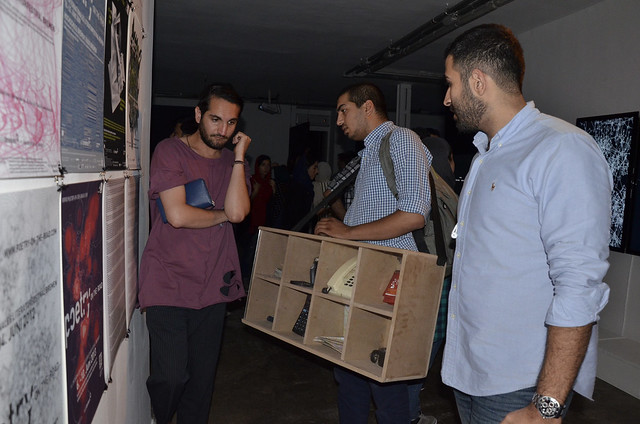
The ‘dumbphne’ performer visiting TADAEX.

Our resident artists Lilian Nejatpour and Simon Weckert had already been working for almost two weeks when the NODE team arrived in Tehran. Both not resident in Tehran, they tell us to have spent the days strolling through the streets, getting to know each other and the place that is hosting them for almost a month.

We find them right in the middle of the hassle to do a video shooting, an exercise that is quite packed with challenges in a place like Tehran. Permissions, it seems, are the most delicate thing to get. For which reason? We are not sure. It is not about privacy issues, that is clear.

The ‘dumbphne’

Simon and Lili are working on a video installation and a performance piece that will premiere at TADAEX 2016. Hanging out in the garden of kooshk, they are explaining their ideas and impressions, how they were connecting in the rush of this city, and how they finally found networked and mobile communication and how it is affecting our gestures and relationships globally a phenomenon they were mutually interested in. Their work ‘dumbphne’ is a performance and video piece that is playfully mimicking and exaggerating ways to use tools of a smartphone. The contact list turns into a proper book, the maps app is a classy old map of the Tehran streets, and instagram returns to his aesthetic source: a beautiful analog polaroid camera. The work is exhibited at TADAEX16 in a white cube that is, at the same time, visited by the performer with his ‘phone’ – or rather dumphne. Just as a normal gallery visitor, he looks at other works and takes a photo from time to time.

The ‘dumphne’ will be shown during NODE17, as well.


During the next days, we get to know great young artists and designers who are sharing their knowledge and are craving for the next source of inspiration. We meet curators that use digital means in the most pragmatic and clever ways to create opportunities of international exchange for their audiences. We take part in electronic AV performances that must be enjoyed while sitting. What we can feel is an undeniable quality of connection and complicity in the air – an atmosphere we are looking forward to dive deeper into…

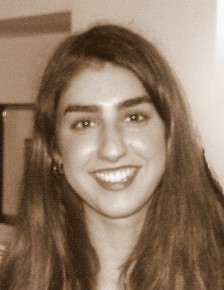
Bonding with the Korintzky Brothers.
Bonding with the Korinsky brothers, two thirds of the ‘Korinsky Atelier für vertikale Flächen’ Sound Collective.

Lilian Nejatpour

Artist

UK / Iran

Lilian Nejatpour (*1994) has recently graduated with a BA in Fine Art and History of Art at Goldsmiths College in London. She is a British, Iranian artist concerned with technology as a mode of evolution that operates through our physical gestures and dialogue.

“It is becoming increasingly visible through overheard conservations that circle around technological invasiveness and sentimentality. I therefore questions how these two very distinct modes operate alongside each other and what problems arise when they are captured and re-situated in romantic conversation. I am delighted to be working with TADAEX & NODE in collaboration with Simon Weckert, to combine and uncover these technological methodologies further in the surroundings of both Iran and Germany.”
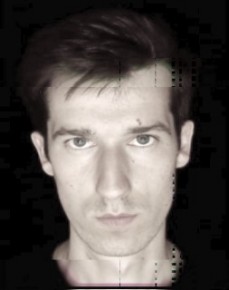
Simon Weckert

Artist, Designer

Berlin, Germany

Simon Weckert (*1989) is an artist and designer with his home base at the University of Art, Berlin. He likes to share knowledge on a wide range of fields from generative design to physical computing and implementation of media projects. His focus is the digital world – including everything related to code and electronics. With his love to new technologies he combines an understanding of visual, physical and interaction design with algorithmic, electronic and mechatronic knowledge. The reflection on current social aspects, ranging from technology oriented examinations to the discussion of current social issues, are always part of his work.


In collaboration with
tadaex

About the artists

Simon Weckert

Berlin, Germany

Simon Weckert (*1989) is an artist and designer with his home base at the University of Art, Berlin. He likes to share knowledge on a wide range of fields from generative design to physical computing and implementation of media projects. His focus is the digital world – including everything related to code and electronics. With his love to new technologies he combines an understanding of visual, physical and interaction design with algorithmic, electronic and mechatronic knowledge. The reflection on current social aspects, ranging from technology oriented examinations to the discussion of current social issues, are always part of his work.

Lilian Nejatpour

UK / Iran

Lilian Nejatpour (*1994) has recently graduated with a BA in Fine Art and History of Art at Goldsmiths College in London. She is a British, Iranian artist concerned with technology as a mode of evolution that operates through our physical gestures and dialogue.

“It is becoming increasingly visible through overheard conservations that circle around technological invasiveness and sentimentality. I therefore questions how these two very distinct modes operate alongside each other and what problems arise when they are captured and re-situated in romantic conversation. I am delighted to be working with TADAEX & NODE in collaboration with Simon Weckert, to combine and uncover these technological methodologies further in the surroundings of both Iran and Germany.”


Jury statements

The jury is granting one residency stipend to German artist Simon Weckert. Weckert’s works show a great openness of conceptual thinking and media use. He employs a variety of media to deal with issues such as human social interaction or commemorative culture in the wake of digitalization. His concepts are straight and engaging and therefore able to transport complex ideas in a dense, yet accessible way. Simon Weckert’s interest in coding and electronics show a genuine affiliation with the artistic and technological context of TADAEX and NODE. By choosing Weckert as a resident the jury aims at opening his perspective towards a foreign art scene and to support him in further increasing his technical and theoretical skills.

The jury has decided to grant one residency stipend to Iranian-British artist Lilian Nejatpour. Despite her young age and early career status Nejatpour’s portfolio shows an extraordinary interesting theoretical approach and intriguing conceptual thinking. Her work analyzes the effects of digitization and digitalization from a socially engaged and philosophical point of view. Her installations and video works use a clear and strong visual language to engage with topics such as formalism and remediation. By choosing Lilian Nejatpour as a resident the jury hopes to foster her interest in digital media as creative tools and to engage her in a vivid dialogue with digital artists from Germany and Iran.


In collaboration with

tadaex


Call is closed – Thank you to all Applicants!

Read the ongoing story…


residency_program_node-a_20160523_an02-2

Goal of the TADAEX/NODE Exchange Program is to establish an exchange between the media arts scenes in Iran and Germany, and to connect the communities that have emerged around each festival.

We will invite these two artist to take part in in two residencies prior to the respective festivals. Both residency periods will last 3 weeks in which both artists will be present in the host cities Tehran (2016) and Frankfurt/Main (2017), get to know the local digital arts scene and take part in the festival activities. The artists are encouraged to share their working experience and collaborate on projects that will be presented in the context of TADAEX and NODE17.

TADAEX/NODE exchange program is supported by:

logo-kooshklogo-basis


Residency at TADAEX
2016 – Teheran, Iran

07.-30. September 2016
TADAEX 22.-30. September 2016

You will live and work for two weeks at Kooshk Residency Space in Tehran and be part of TADAEX. During your stay, you will collaborate on the creation of an artwork, which will be presented to a local and international audience at TADAEX. Travel, accommodation and an artist fee will be provided by the hosting institutions. Intensive collaboration and on-site research are strongly encouraged.

Residency at NODE
2017 – Frankfurt, Germany

NODE17 Summer 2017, 
precise dates will be announced soon!

Together, you will work at the production and exhibition venue basis Frankfurt e.v. and be part of NODE17 Forum for Digital Arts. You are encouraged to continue the collaboration that has been initiated in advance to TADAEX and get the opportunity to show the resulting work to a local and international audience at the festival. Travel, accommodation and an artist fee will be provided by the hosting institutions.


Application

Apply here Call is closed

Your application should include:

1. Motivation (3.000 characters max.)

  • Your personal interest in the residency,
  • your expectation regarding the collaboration with your partner,
  • an idea for a project you would like to work on (a short outline will do),
  • and a short statement on how you relate your work to the context of TADAEX/NODE.

2. CV

3. Portfolio

A PDF, 1–3 works, 6 pages max., including descriptions of the works and links if the work contains media such as sound, video, movement etc. in the PDF.

Schedule

Application Deadline: The application for the joint TADAEX 2016 and NODE17 exchange program must be submitted until June 30th, 2016.

Jury Selection: July 15th, 2016

We provide

  • Work space
  • Travels + accommodation
  • Tech support and equipment (provided by the festivals)
  • Artist fee including production budget (1.000 € p.p.)

Jury

  • Florian Egermann, Jeanne Charlotte Vogt & Alexandra Waligorski (NODE)
  • Ali Phi (TADAEX)
  • Tooraj Khamenehzadeh (Kooshk Residency)
  • Farnaz Ghorbani Monhasser (Cultural department of the german embassy, Tehran)
  • Amir Bastan and Georg Scherlin (artists in residents 2014/2015)

Questions?

NODE – Verein zur Förderung Digitaler Kultur e. V.
Gutleutstrasse 96 / 60329 Frankfurt / Germany

c/o Jeanne Charlotte Vogt
jeanne@node-forum.org

STAY IN TOUCH

Receive news about NODE's latest events, publications and more.


Choose your subscriptions

We use Brevo as our marketing platform. By clicking below to submit this form, you acknowledge that the information you provided will be transferred to Brevo for processing in accordance with their terms of use

GET IN TOUCH

PING@NODEFORUM.ORG


  • UPCOMING ACTIVITIES
  • IMPRINT
  • PRIVACY
  • PRESS