Digital tools are not new to the field of architecture, but the last few years have seen an explosion in the use of generative systems combined with digital manufacturing processes. This new style of computational architecture explores the creation of complex forms based on parametric processes, giving rise to a new range of architectural expression while eliminating the economy of mass-produced form. Positioned at the heart of this movement, SOFTlab is an emerging architectural practice whose work combines scripted processes with knowledge of materials and principles of construction.
‘Sketches 2005-2010’
About the moderator
Open experiments and showcases
Particle Madness
Participants experiments
Within this workshop people were invited to start their own little experiments: Controlling a drone via LeapMotion hand-tracking and collecting experiences for innovative interfaces for controlling machines.
The workshop host
Behind the scenes
Workshop participants and host Arístides García explaining the creative process from digital sculpturing the shape and resolution over laser cutting to the final object.
About the host
Art and Brainwaves
Interview with Patcher Kucha participants
Carolien Teunisse and Sabrina Verhage
They talk about their background as media artists and their activities as organizers and curators of Creative Coding Amsterdam and Fiber festival.
Furthermore they encourage woman to get active in and contribute to the so far male driven communities for creative coding.
Moderation
Hosted and moderated by one of MESO’s front men, Max Wolf, Patcher Kucha is always a guarantee for tech tunes and rock ’n’ roll.
Max Wolf
Frankfurt, Germany
Max Wolf is an associate of the vvvv group and co-founder of MESO Digital Interiors. He has been lecturing at several international universities and his work has been shown London, Paris and Munich.
2010 – Visiting professor, digital environment design, NABA Milan, Italy
2006 – Visiting professor, product design, HfG Offenbach, Germany
2005 – Visiting professor, media design, Bauhaus University, Weimar, Germany
2001 – Diploma in product design, HfG Offenbach, Germany
Wolf works as a designer / artist have been exhibited in (selection):
Haus der Kunst Munich, Tokyo Designers Block, Design Museum London, Kunsthal Rotterdam, Centre Pompidou, Paris.
The artists
Complementary tech talk
At NODE15’s educational platform the artists presented their software code that drives the audio-visual performance. Especially insights into the high complex generation of real-time 3D graphics and its real-time interaction was interesting for the participating coders, developers and artists.
Please note: This video was recorded and is provided by the participants and is not licensed for NODE e.V.
About the artists
‘Lumière II’
In our desperation for control in a world more and more out of control, we began expressing these rules about objects in our aesthetics. Guided by visions of a near future in which the real and the virtual would be seamlessly blended, we created prototypes and simulations with increasingly higher fidelity.
Yet the tyranny of the frame prevailed. Our rules collided with systems of another dimension. Stubbornly, we carried on building the simulacrum. We gritted our teeth, we dug in our heels, and we fought to stay lucid as our dreams shimmered across legions of rectangles.
In the context of NODE and its subject ‘The Rules’, before and during the NODE forum 2013 the Deutsche Börse Residency Program was given to Gabriel Shalom and Patrizia Kommerell, both founder of the Berlin based Studio KS12. During their residency the artists conducted an audiovisual research. Findings were collected together to form the video essay “Another Dimension”.
For the NODE13 Opening “Another Dimension” was screened for the first time. This video essay features the artists Dmitry Paranyushkin, Onyx Ashanti, Gabriel Shalom and Protey Temen.
This performance addressed each of its viewers as individuals, not as members of an audience. When experiencing MOVEMENT C, each viewer is at first preoccupied with the dancer, but eventually loses this awareness. No aspect of MOVEMENT C is designed to be spectacular; the intention is to cause a subtle sense of drift in the viewer’s perception; to act as a seductive attraction by means of aesthetic clarity, tranquility and depth.
Despite its intensive use of 3D projection and stroboscopic flickering, MOVEMENT C is primarly focused on creating imaginative images in the viewer’s perception. Light and sound in accordance with Yuebing Lou’s movements orchestrated the beginning of the performance which culminated in a vertical screen glowing at the end.
Since the 1990s, when Ulf Langheinrich formed part of the Granular Synthesis collective, he concerned himself with developing large scale audiovisual installations, hulling the audience into immersive experiences. His oeuvre regularly appears in internationally renowned festivals around the world. Yuebing Luo is a choreographer and dancer based in Guangzhou, China. He is also one of the co-founders of “Free Will Stage”, a group that brings classical theater into public spaces – a true pioneer in the field of dance and performance in China.
About the artist
And how is the situation changing with digital tools? Overwhelming complexity is strikingly simple thing to do on a computer. The repetition of beats has come a long way from being only available at shamanic rituals to being the most trivial thing to click on a drum machine.
Since the popularisation of digital music we have been confronted with musicians on stage who have literally nothing to do anymore other than staring blankly into laptop screens. Each digital tool had pushed music to a new level. What does this mean for music makers and music lovers?
Watch the lectures
in full length!
Peter Kirn
Classically trained in composition and piano, he is now focussing on live electronic performance, founded the blog http://createdigitalmusic.com and co-created the open source synthesizer MeeBlip.
Sam Aaron
Computer programming is often seen as an utterly abstract and autistic process, but the composer, scientist and software developer Sam Aaron stages the act of computer programming as a impovised musical performance.
Robert Henke
Live performances of electronic and especially dance music have been revolutionized by a software aptly named “Live” conceived by Robert Henke with his partners at Ableton in 1999.
Gregor Schwellenbach
Gregor Schwellenbach plays twelve different classical instruments, programs electronic compositions for performance spectacles, conducts music for ads, produces radio plays and even wrote an opera about sugar.
But there is a surprising number of human senses, which are still locked out from digital design. Current experiments with olfaction and proprioception may feel like early medieval experiments with perspective or the crude voice synthesis experiments of the 1950ties. But opening up these senses to digital design tools will (again) completely change the way how we feel about technology.
We will discuss with transdisciplinary makers giving perspectives on architecture and design, olfactorics, proprioceptics and our construction of form and reality.
Watch the lectures
in full length!
Mirko Becker
Mirco Becker is Guest Professor for Architecture and Performative Design (APD) at the Städelschule Architecture Class (SAC), Frankfurt.
Mark Farid
The conceptual artist Mark Farid examines the ethics of performing in social situations to help understand the administrated identity of the individual.
Pedro Lopes
As a dedicated musician and turntabelist Pedro Lopes knows a lot about getting into a flow with intuitive interfaces.
Mark Lukas
The sense of smell is one of the few human senses, which still resist digitalisation. Scents are still magical and difficult to grasp.
Today most digital technology still consists of hard boxes, Modern material science, electronics and sensor technologies aim at bridging that gap, allowing textiles and clothing incorporating yet-to-be unseen functionality in our second skin.
We will discuss with transdisciplinary makers giving perspectives on fashion, material science, craftsmanship, economics, electronics and self optimization.
Watch the lectures
in full length!
Verena Kuni
She is a curator, writer, scholar in art theory & history, cultural and media studies and professor for visual culture at JWGU in Frankfurt.
Zack Freedman
Zack Freedman from NYC is a hardware developer and hacker, a cyber-activist and hyper-neoliberalist.
Hannah Perner-Wilson
Hannah Perner-Wilson explores the use of textile crafts and electronics as a medium for commenting on technological aspects of today’s “high-tech” society.
Janine Häberle
Janine Häberle is a trained textile designer, working at Forster Rohner Textile Innovations, one of the leading companies for fashionable embroideries in Haute Couture and Lingerie.
Drones may bring roasted pigeons or Amazon deliveries in the future, but already today bring death and terror to humans having the wrong bits in their digital records.
A global butterfly effect connects any potential action of any human being to an arbitrary reaction of anything else in the future. We are wrapped in code. And any computer can be reprogrammed as any other computer, so the code may change. It starts blowing our mind.
Watch the lectures
in full length!
Kyle McDonald
Kyle McDonald (US) is an artist who works in the open with code. He is a contributor to arts-engineering toolkits like openFrameworks, and builds tools that allow artists to use new algorithms in creative ways.
Anna Biselli
As a political activist and a trained computer scientist Anna Biselli found that the many of the most interesting technical problems lead to vast political challenges in a future society.
Matthieu Cherubini
Matthieu Cherubini is currently a PhD candidate in the Design Interactions department in Royal College of Art. His research by project examines the implications of artificial moral agents on our domestic and everyday lives, both today and in the near future.
Featured
AV performances
Beware, this is nothing for the faint hearted! Loud lasers, sick lights and brutal projections. All surrounded by sweet soaring sounds.

‘Recession’
AV performance
by 1024 architecture
The third part of the trilogy Euphorie-Crise-Recession is an audio-visual performance, a journey through what’s left of our civilisation.

‘Lumière II’
AV performance
by Robert Henke
Powerful lasers draw rapid successions of morphing shapes and connected points in space.
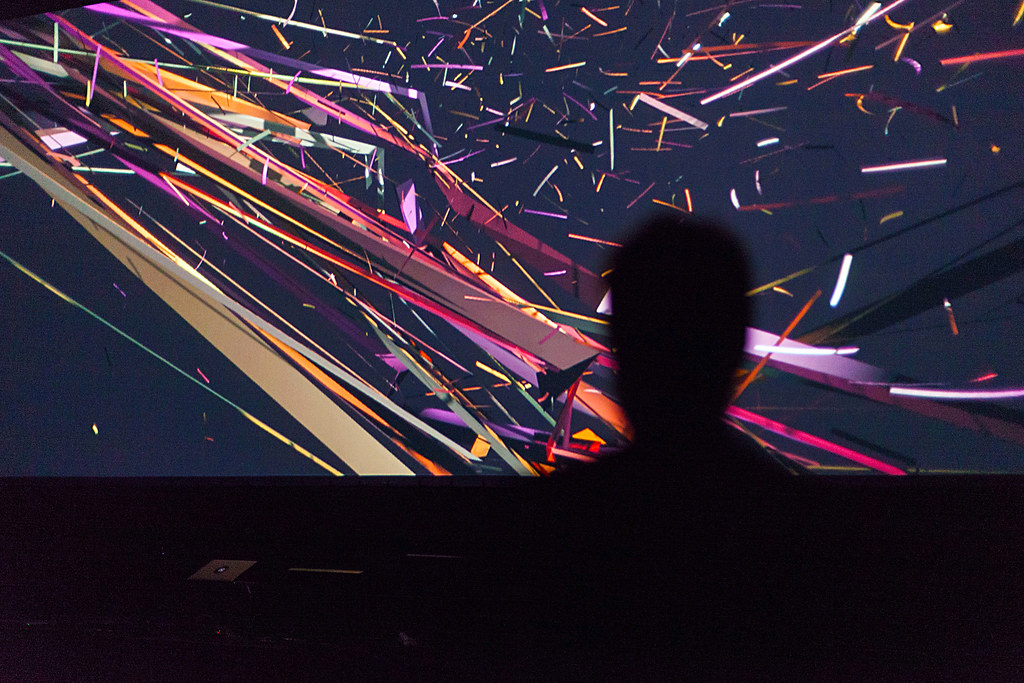
‘Ravel Landscapes’
AV performance
by Quayola, Natan Sinigaglia
Through the use of bespoke software, the polyphonic sound of the piano is analysed and transformed into visual compositions.
‘Repetitive Beats and Conditionals’
The Augmented Hand Series by Golan Levin (US), Chris Sugrue (US) and Kyle McDonald (US) functions like a funhouse mirror suggesting alternative shapes for our hand. We may be given several more thumbs, longer ones or twisting tentacles. Like a plastic surgery preview device we are offered the opportunity to switch between options of style. We can train our new hand and to accept the link between our mind and the imaginary sixth thumb.
As playful a device it is, the installation causes a subliminal irritation that questions the potential for letting new applications, transformations and maybe even technological enhancements in. In times of increasing ‘information of the body’, are we able to adapt to any alternative, even virtual bodily shape?
The installation consists of a box into which the visitor inserts their hand, and a touchscreen interface which displays their ‘reimagined’ hand, altered by various dynamic and structural transformations. The kiosk is accompanied by a large rear-projection. The touchscreen allows participants to select among the different transformations.
Critically the project’s morphological transformations operate within the logical space of the hand itself. That is to say: The artwork performs “hand-aware” visualisations that alter the deep structure of how the hand appears unlike, say, a funhouse mirror, which simply distorts the entire field of view.
About the artists
Challenging the myth that virtuality comes exclusively together with disembodiment, VR setups such as ‘Machine to Be Another’ give us an opportunity to question the boundaries between two people and to see and feel the world as someone else. ‘Machine to Be Another’ is an Open Source Art investigation on the relation of Identity and Empathy that has been developed on a basis of low budget experiments of Embodiment and Virtual Body Extension.
Designed as an interactive performance installation, the ‘Machine’ offers users the possibility of interacting with a piece of another person’s life story by seeing themselves in the body of this person and listening to his/her thoughts inside their mind.
The performer is someone interested in sharing a story about his/her existence. This role can be assumed by an actor interpreting a real situation, or rather it may be taken by any person (e.g. from the public) who is interested in sharing some episode about his or her life. In any case, the stories that are told by the performer will be experienced by another person, say the user.
Interview with the artists
With ‘The Machine to Be Another’, Philippe Bertrand, Daniel Gonzalez-Franco (ES), Arthur Pointeau (FR), Christian Cherene (FR), Marte Roel (MX) created a simple tool that can be applied in a variety of experimental situations. Together with partner institutions, they invented several different setups representing social scenarios that are demanding for an increasing empathy.
Complementary workshop
‘Empathetic Technology Design’
As part of NODE15’s educational platform, the artists introduced and demonstrated the technological aspects behind their work.
As the project is realized open source, workshop participants learnt how to implement and adapt this empathetic technology concept for their own scenarios.
About the artists
Tools for multidisciplinary collaborations
Anti-Surveillance Camouflage for Your Face
Harvey’s project ‘CV Dazzle’ explores how fashion can be used as camouflage from face-detection technology, the first step in automated face recognition.
It uses bold patterning to break apart the expected features targeted by computer vision algorithms.
About the artist
Digital face analysis as admission ticket to Dovey’s ironic ‘hipster bar’
Dovey’s recent performance projects have contributed and disrupted the development of computer vision software and image tagging applications. By looking at performance works as case studies he mapped an overview on the different ways in which computer vision software is developed from visual data sets to training models and real world applications. Dovey explained this viewpoints with some live examples and demos of performance works.
Want more? Read an interview with Max Dovey.
About the artist
Investigating on the relationship between surveillance and private space
Rayzhekov’s project ‘10VE’ is a participatory musical biofeedback and movement composition for two actuators and an audience. It interconnects contemporary electronic music, performance and participatory art through technology.
The project started in 2014 by Antoni Rayzhekov and Katharina Köller within the ATALAIA Artes art residency, Ourique (Portugal) and was later i.a. performed in Frankfurt at NODE15 Forum for Digital Arts.
About the artist
NODE+CODE #5 – You, me and my computer
About the artist
Presented at saasfee*pavillon,
exhibiting installations by
yacin/ruben/david and Patrick Raddatz.
About the artists
About the speakers
The ‘field framework’ has long been sort of a ghost in the area of creative coding environments. It is very unique as it is a true polyglot (Java, Python, Clojure, …) system that enables both visual and text based (live) coding.
About the speaker
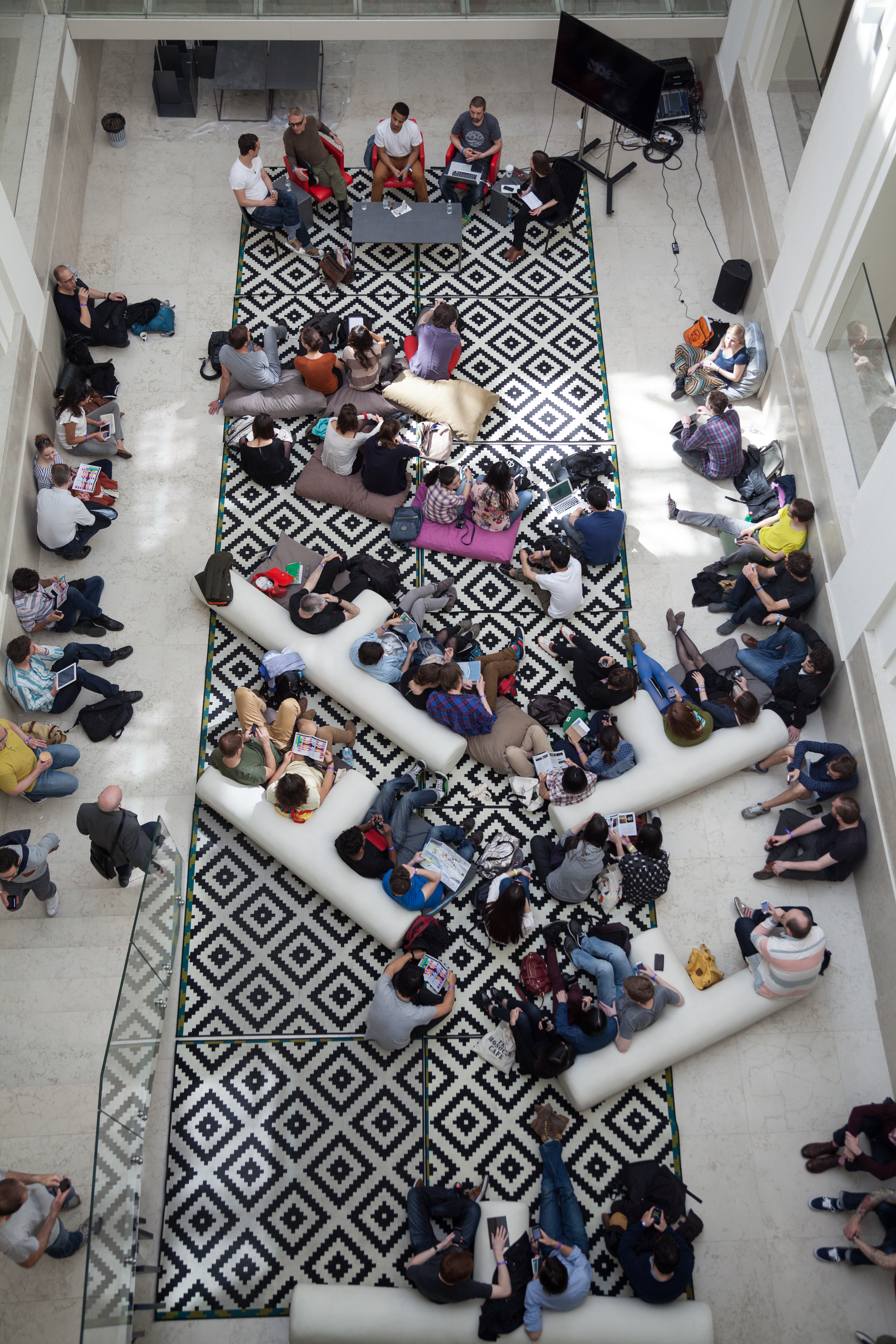
The panelists at Resonate 2014 discussed the different routines in the two worlds and the resulting different approaches to time and working pace. The wide spread fear that technology might be perceived as an intruder and limiting factor for the dancer was responded with a call by Klaus Obermaier for understanding the generative image as a performance partner instead. The panelists agreed that for the development of future formats of collaboration these differences will need to be addressed.
At the same time, through the discussion it became clear that coding is a form of choreographic thinking. Not only the similarities between software and choreographic systems but also the similarities in mindset called for a common claim: coders should be encouraged to develop their own performative artistic language. They do have the potential to become an equal partner in the development of choreographies in the dance world.
The remaining impression of the panel was that there is a lot to talk about and far too much to cover it in a 90 minutes session.
To stay informed about next steps and opportunities for joining the discussion, visit: http://choreographiccoding.org
The NODE contributors
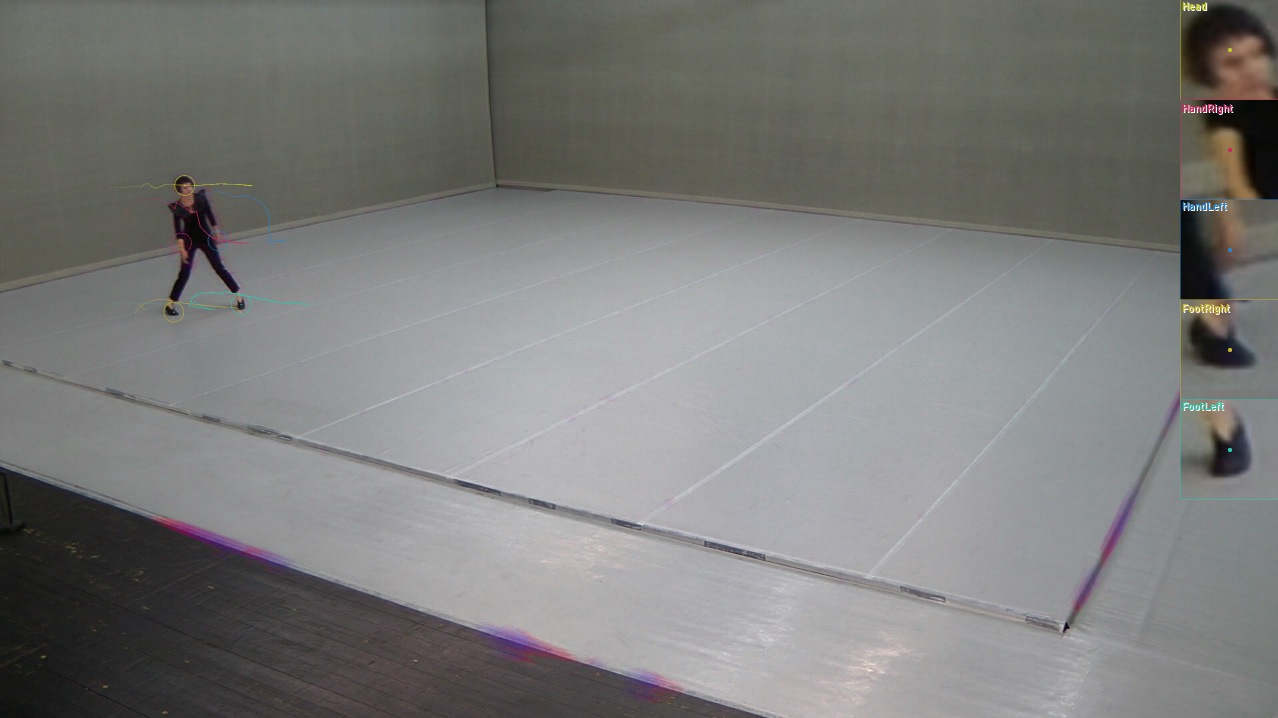
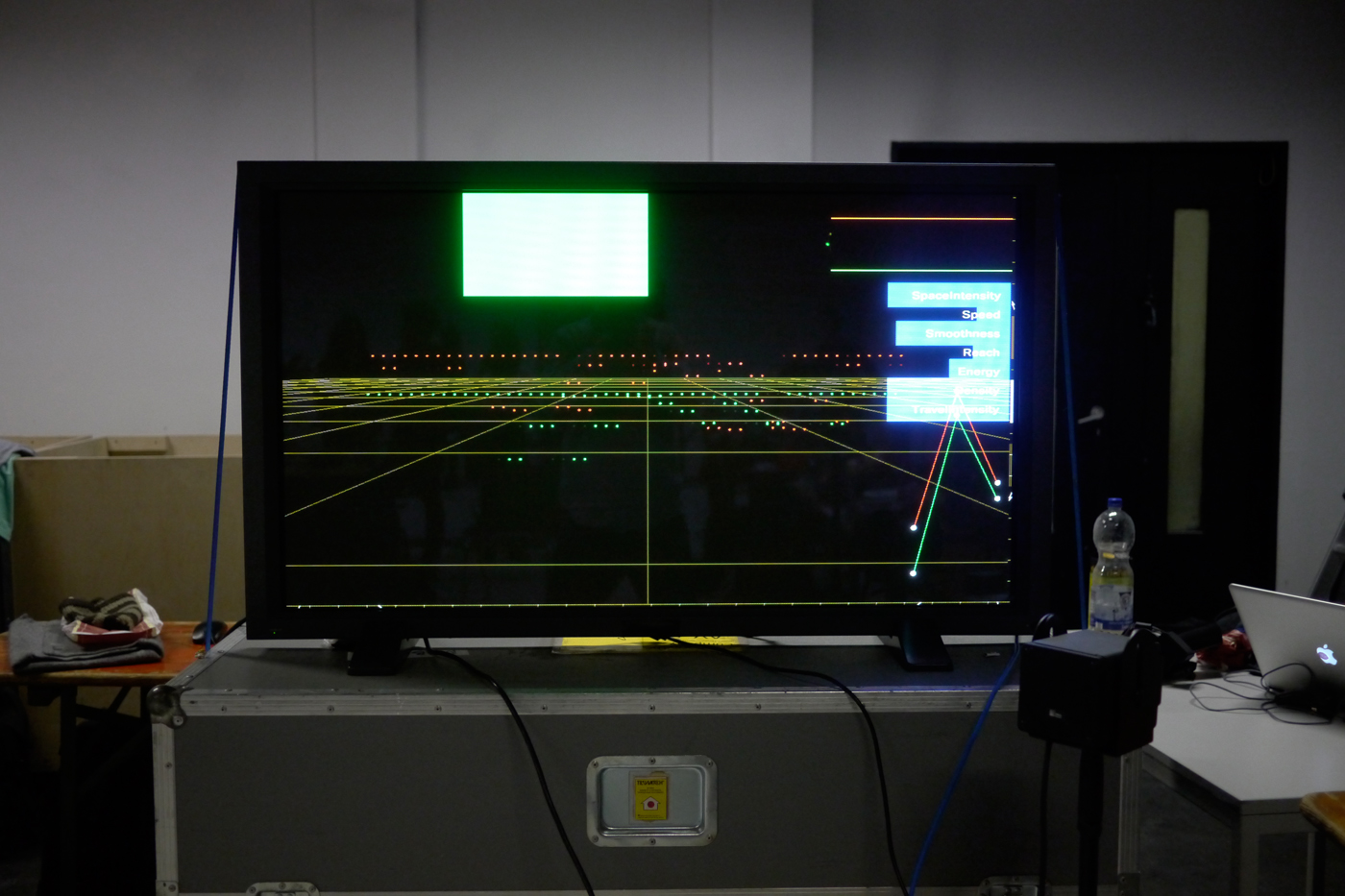
Amongst others, we investigated the role of technology and coders in dance performance, in training and live on stage.
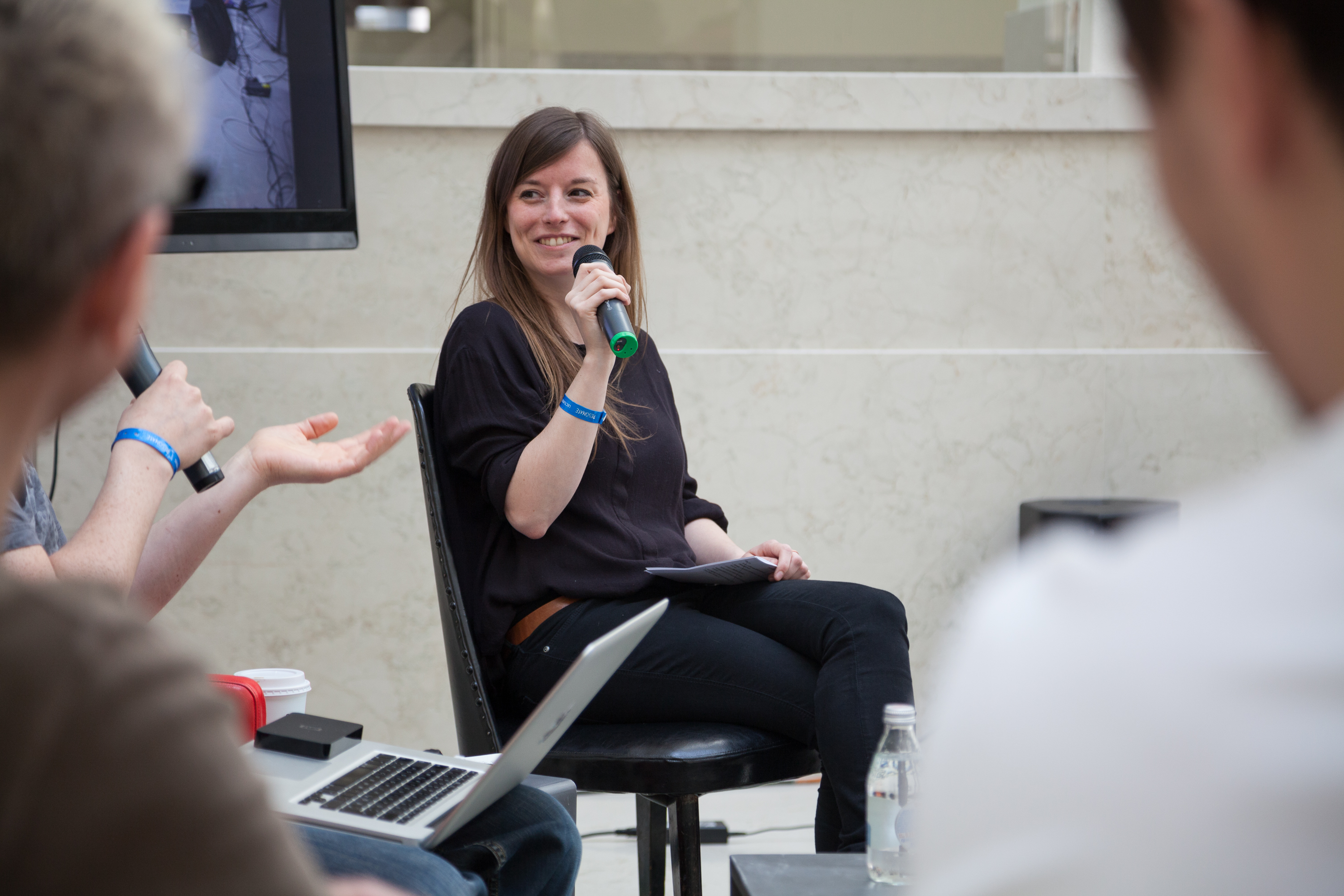
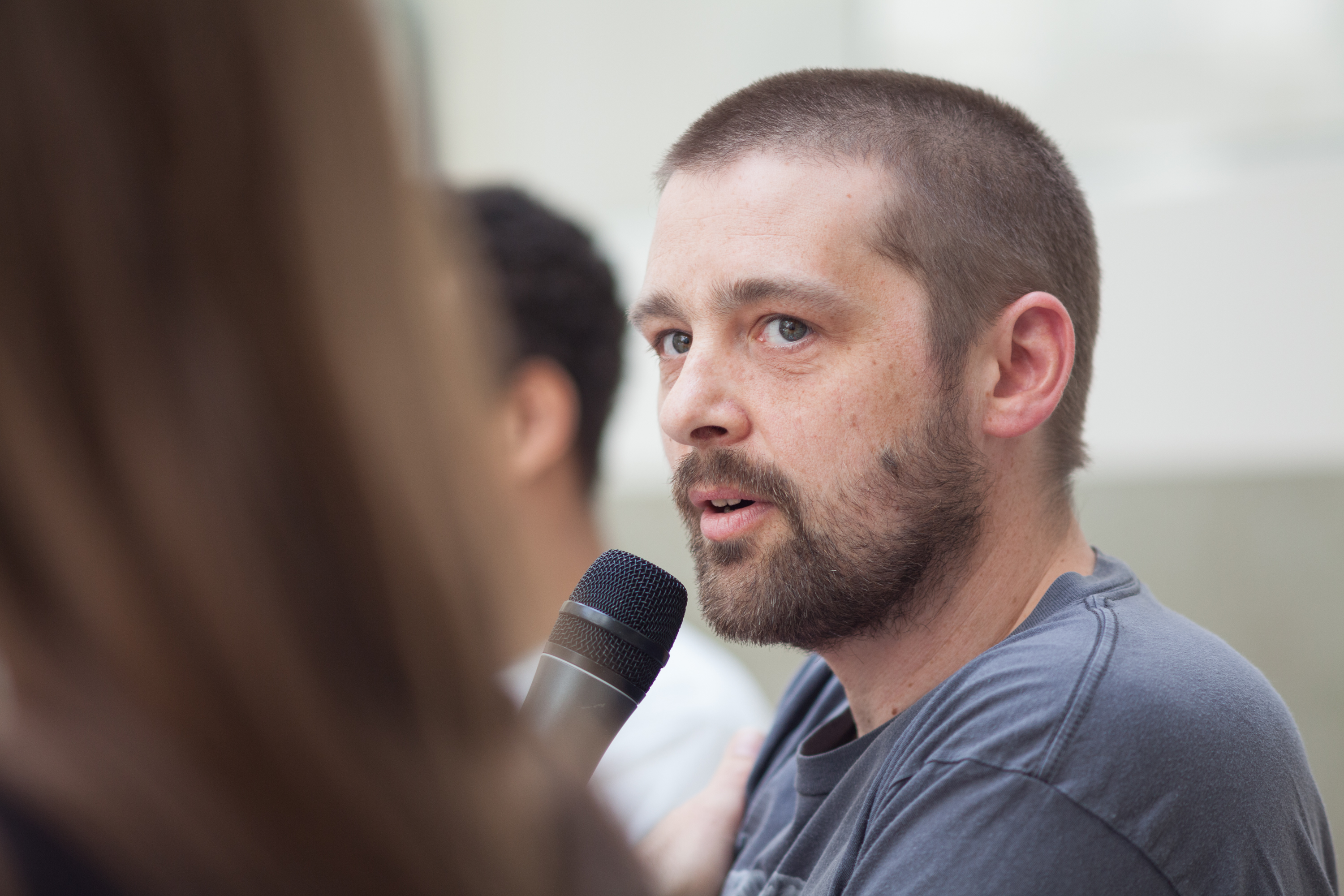
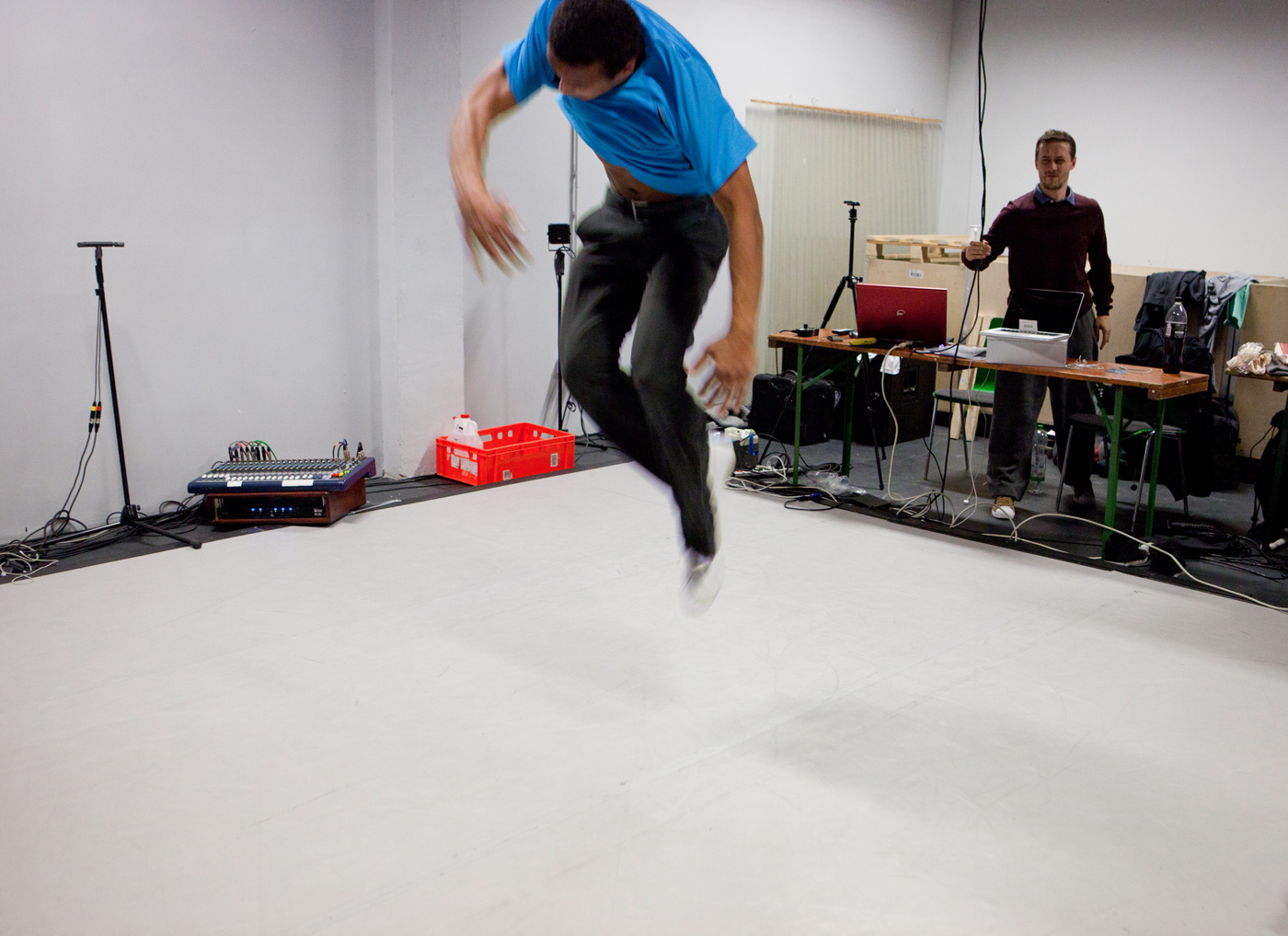
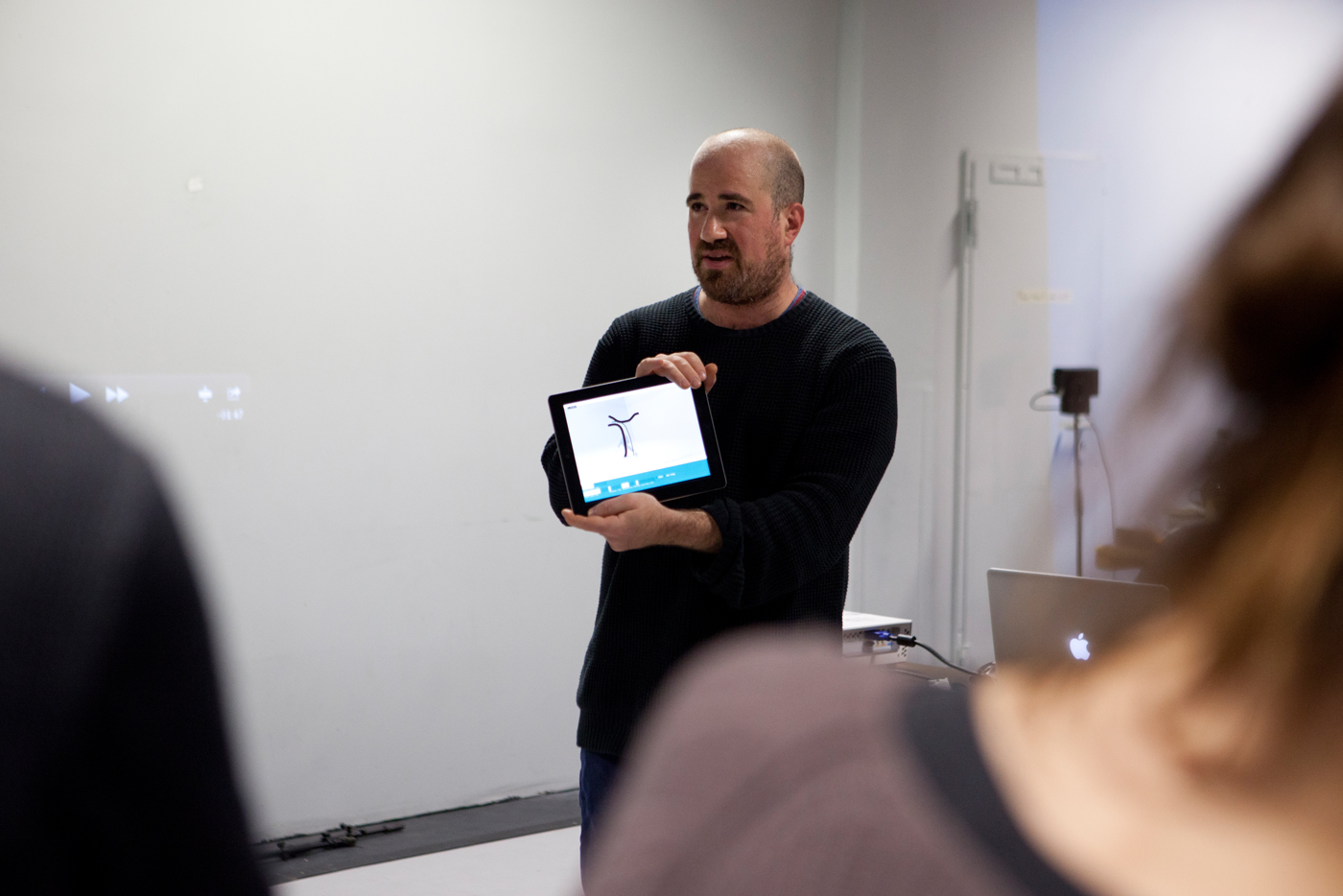
As moderator Jeanne Charlotte Vogt pointed out the following questions:
Why should we collaborate, which formats can foster collaborative research at a visible level, and is there true meaning and impact for both coders and dancers in collaboration?
Florian Jenett shared his experiences with the dance world at The Motion Bank, a project of The Forsythe Company that has fueled the discourse between the dance world and digital artists, initiating large scale collaborative research. He talked about his experience with choreographers who enjoyed his analytical work as inspiration for further projects but considered it a distraction from the actual work with the body.
Plus special guests
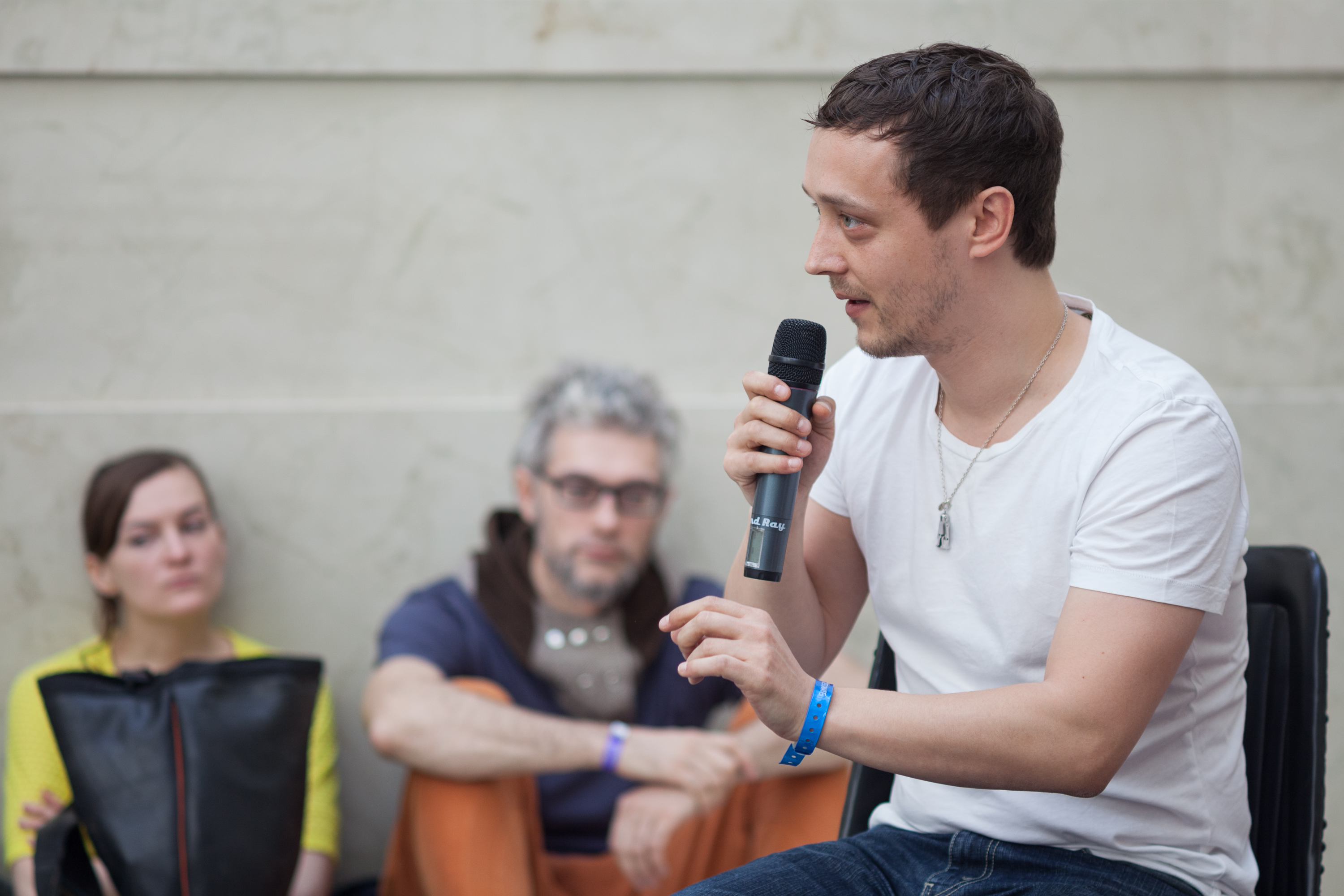
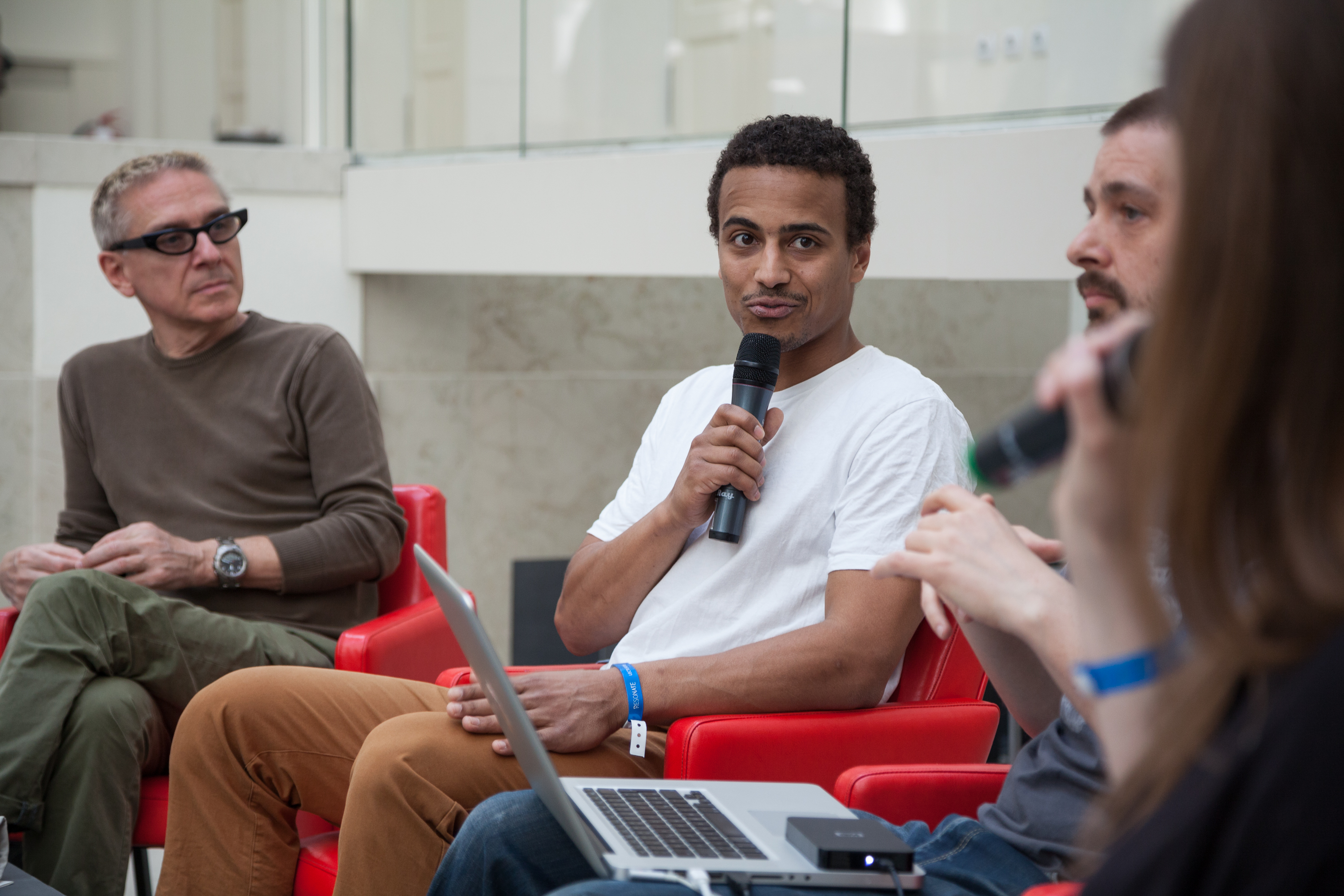
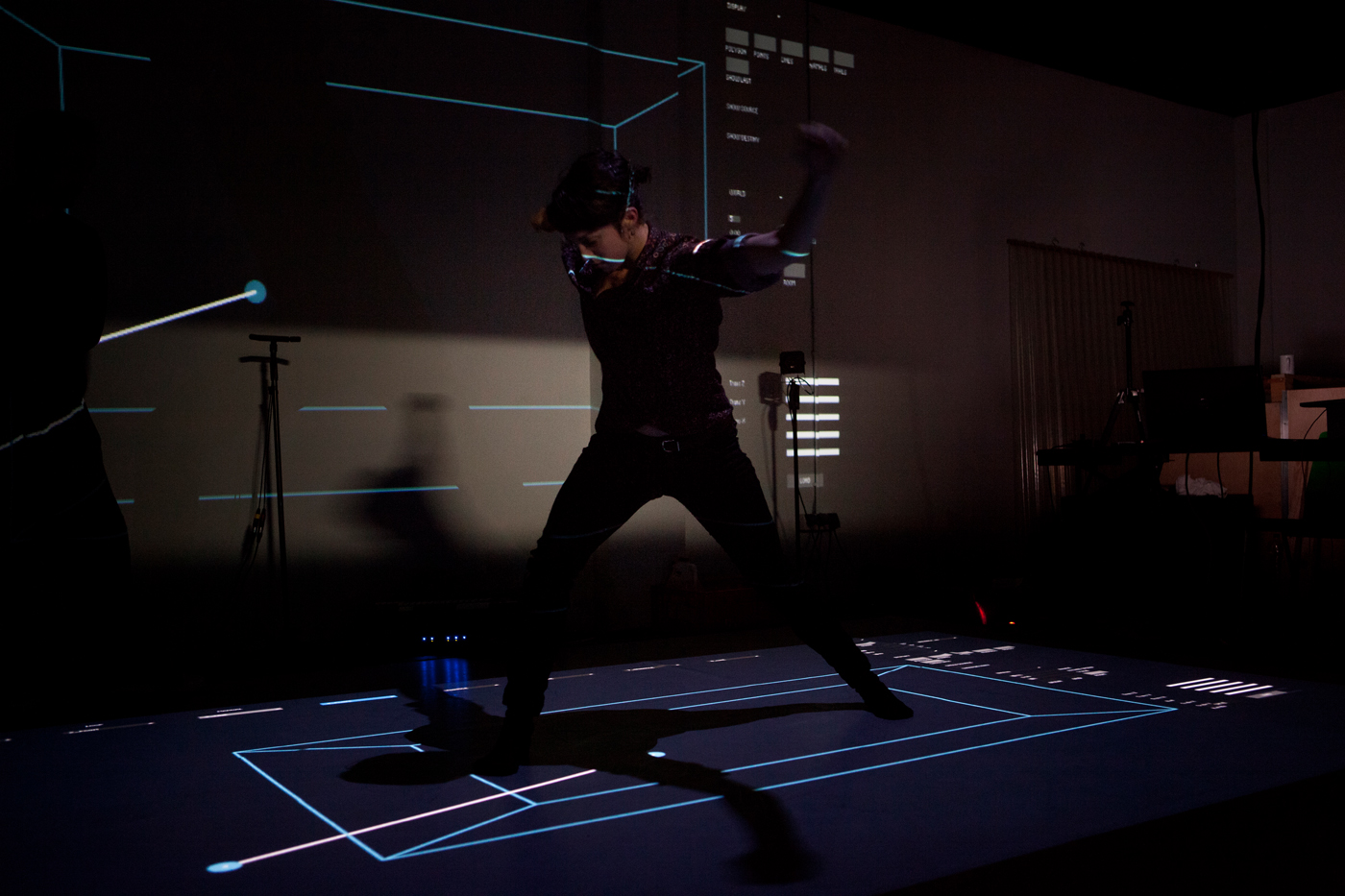
In their training, on the other hand, Christian Loclair and Raphael Hillebrand perceive improvisation tools as a support to grow beyond physical routines and standards.
Raphael Hillebrand, born in Hong Kong, raised in Berlin, educated through Hip-Hop, he uses his multicultural background to create his own vision of self-expression.
1997 Raphael Hillebrand began as a bboy at jams and competitions in Berlin, Germany. As a former member of 5-Amox and B-Town Allstars he won several championships such as the national Battle of the Year 2006 and the 2vs2 at the IBE in Rotterdam. Niels “Storm” Robitzky introduced him to the world of theater, at first as a dancer than as a choreographer. He combines his technique of breakin’ and poppin’ with a distinctive use of shadows and masks, which we have seen in his choreographies “Together Alone” and “Nhiều mặt„. As a member of the legendary Battle Squad and Animatronik he is an passionate member of the Hip-Hop community.
Christian “Mio” Loclair investigates collaborative media and dance mechanisms. Christian started his career as a professional dancer in 2001.
His work is mainly focussing on combining media technologies and performative art. In 2005, he founded the Animatronik Project together with his mentor Niels “Storm” Robitzky. The idea behind Animatronik is to search for illusionary effects in body movements and its inner nature. He also implemented the acceleration based Popping Video Game (WiiPop) working with real physical data and the virtual improvising Funk Humanoid. At the University Potsdam he studied Computer Science, specializing in Media Engineering and Human Computer Interaction. Since 2012 he is collaborating with onformative, a studio for generative media melting art, science and design.
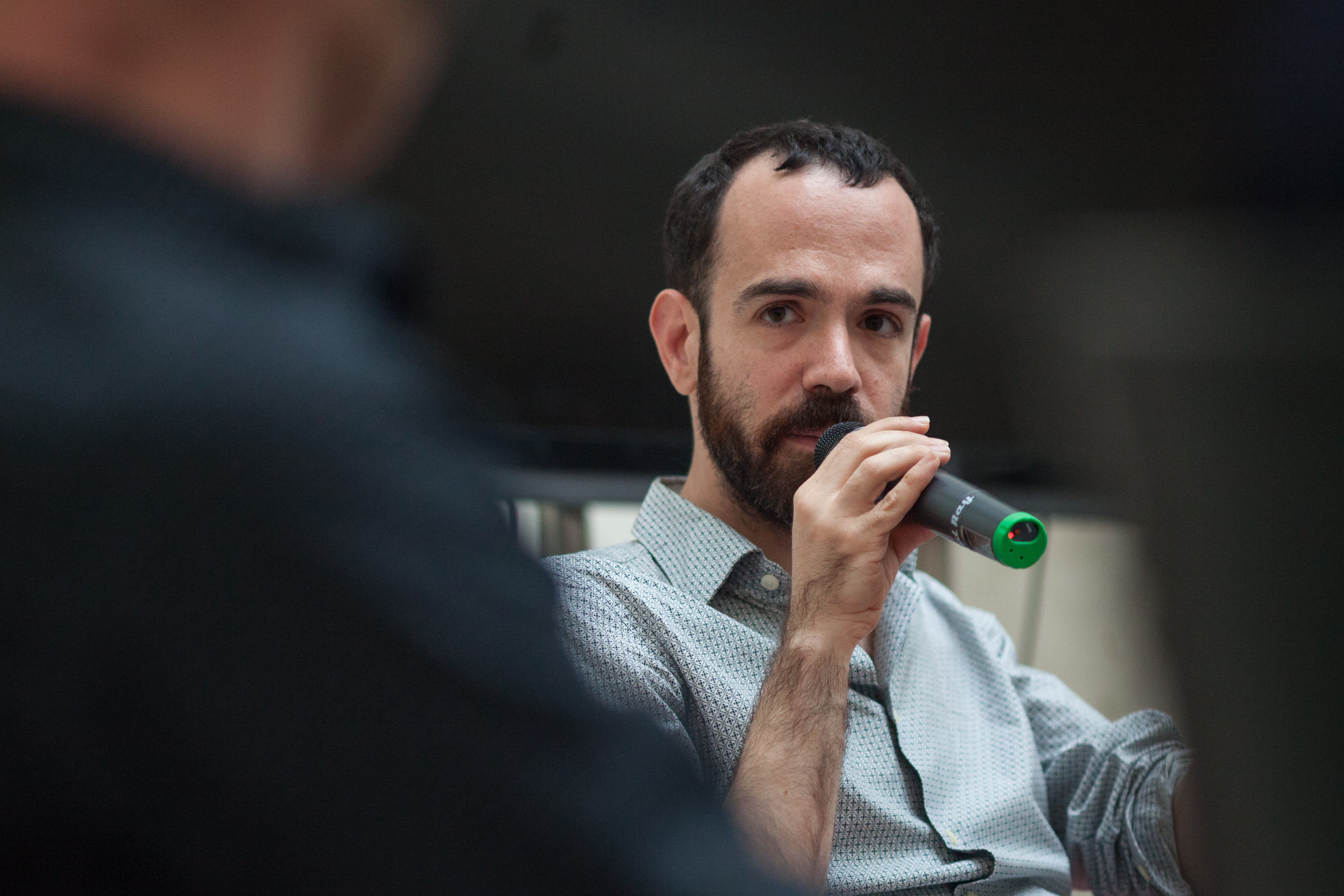
Klaus Obermaier creates innovative works in the area of performing arts, music, theatre and new media, highly acclaimed by critics and audience.
His inter-media performances and artworks are shown at festivals and theaters throughout Europe, Asia, North and South America and Australia. He worked with dancers of the Nederlands Dans Theater, Chris Haring, Robert Tannion (DV8), Desireé Kongerød (S.O.A.P. Dance Theatre Frankfurt)… He composed for ensembles like Kronos Quartet, German Chamber Philharmonics, Art Ensemble of Chicago, Balanescu Quartet, among others.
Since 2006 he is visiting professor at the University IUAV of Venice teaching directing and new media. Also since 2006 he is jury member of the international choreography competition ‘no ballet’ in Ludwigshafen/Rhein, Germany. In 2005 and 2008 he taught as an adjunct professor for composition at the Webster University Vienna. In 2010 and 2011 he held courses for choreography and new media at the Accademia Nazionale di Danza di Roma.
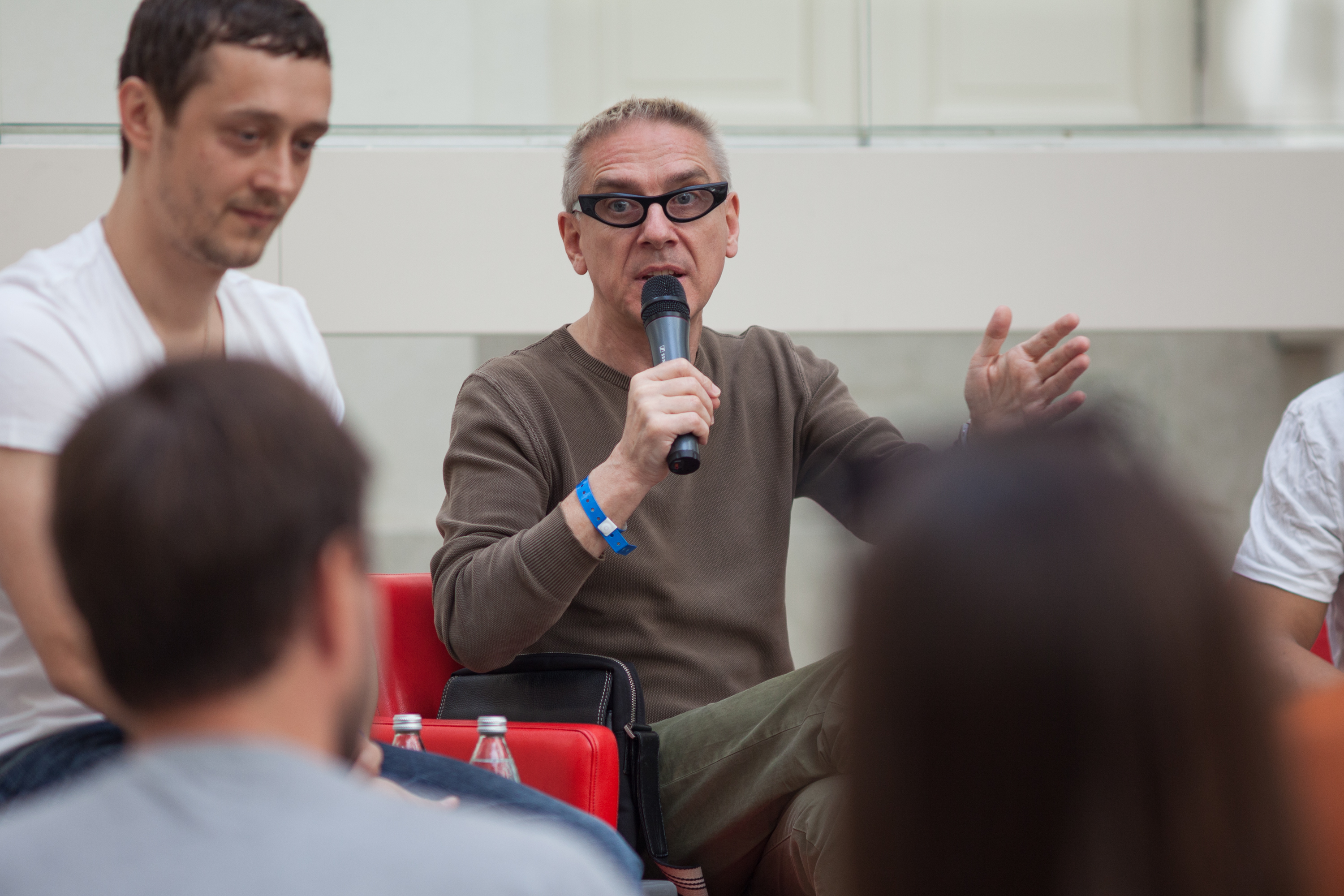
Peter Kirn is an audiovisual artist, journalist, and technologist. He is the founder of CDM (cdm.link /createdigitalmusic.com / createdigitalmotion.com), leading sites covering creative technology for one decade, has contributed to magazines from Popular Science to MAKE and (in a home studio feature) Men’s Health, and teaches free and open creative technology.
He is also co-creator of the open source MeeBlip hardware synthesizer. A regular collaborator with dance and movement, he is a veteran of the former Dance Theater Workshop Dance and Technology residency in New York. He produces electronic music from experimental to live techno, including the duo NERKKIRN (V-Records).
Thanks to Resonate festival
and Nemanja Knezevic, who took all the wonderfull photos
The CCL offers unique opportunities of exchange and collaboration for digital media ‘code savvy’ artists who have an interest in translating aspects of choreography and dance into digital form and applying choreographic thinking to their own practice. They are working with patterns in movement scores and structures through finding, generating and applying them with results ranging from prototypes for artworks to new plug-ins for working with dance related datasets. CCLs also seek to support a sustainable collaborative practice among its participants encouraging ongoing exchange in a growing artistic research community.
Since then, Motion Bank has hosted eight CCLs all over the world in the U.S., Brazil, Australia and different places in Europe. CCLs have gathered a community of more than 100 experts in the field and created a network of many renown institutions (HZT Berlin, NYU Tisch, Deakin Motion Lab and many more).
CCLs are organized by Scott deLahunta, Florian Jenett and Jeanne Charlotte Vogt.
Introduction by the team
Demonstration by participants
A selection of projects by former participants…
‘Pathfinder’
is a dance rehearsal tool developped by Christian ‘Mio’ Loclair and Raphael Hillebrand who have been participating in the very first CCL edition at Frankfurt_ID in October, 2013.
‘body(input); //spin off’
by Motion Bank associate Maria Judova and Marketa Kuttnerova. Both attended CCL#2 at HZT Berlin in 2014.
‘Cellular Body’
by Naoto Hieda who attended CCL#4 in New York and worked on his personal interpretation of ‘no time to fly’ by Deborah Hay.
‘Alteration’
by MONOFILM, an art collective consisting of the dancer Wooguru and the new media choreographer Antoni Rayzhekov
The Motion Bank Team
Relations and questions
on ‘art and systems’
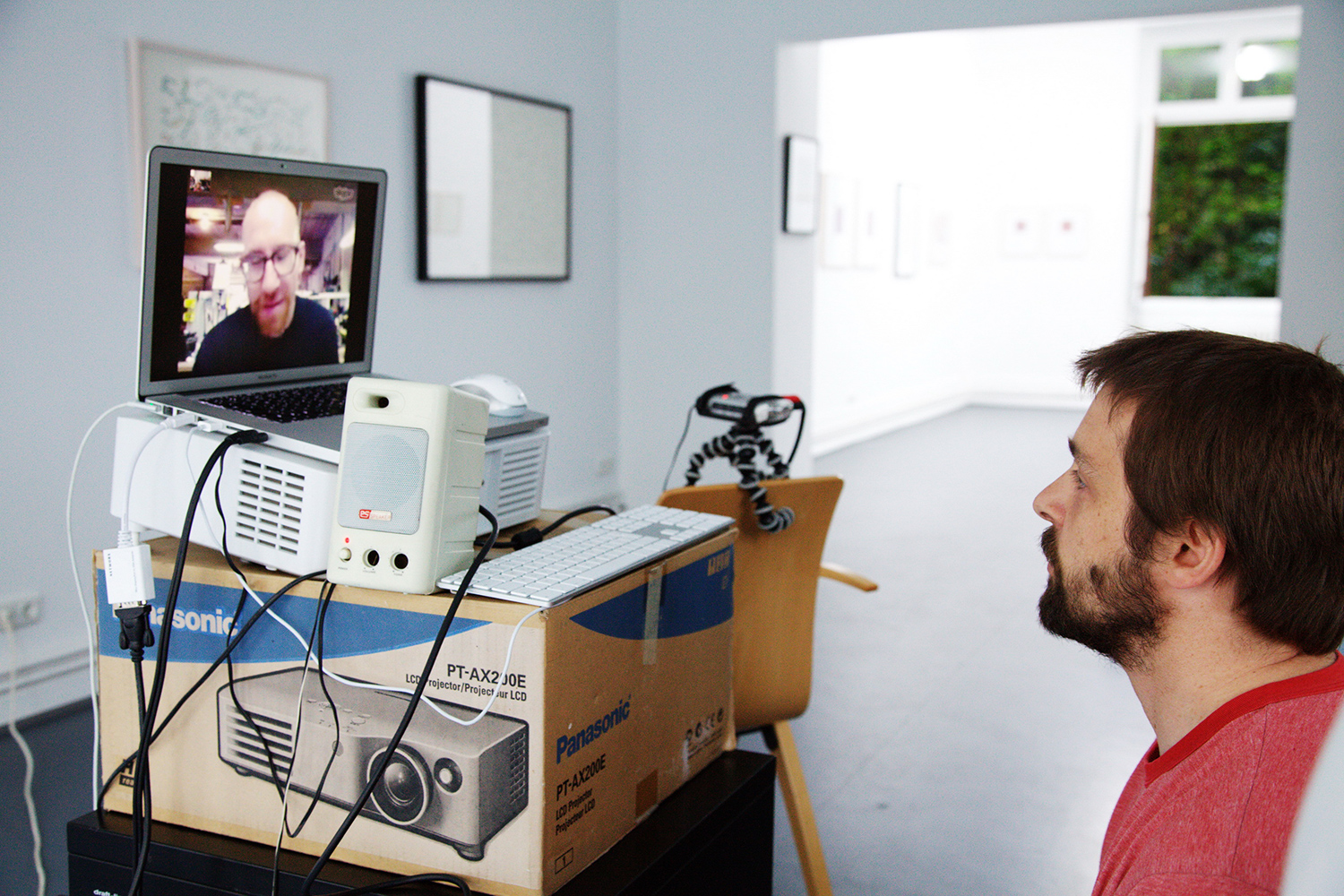
On August 27th, NODE+CODE virtually invited Matthew Epler, founder of the ReCode Project, for a Skype chat to DAM Gallery Frankfurt.
Epler has set up a website to invite people to get to know and translate works by early digital artists like Manfred Mohr into the Processing programming language based on scans from old “Computer Graphics and Art” magazines. Any work translated there receives an open source license and can be accessed and remixed through the website.
ReCode is an attempt to spread, analyse and preserve early artistic work of digital nature – an honorary intent, if there wasn’t the complicated relationship between authorship and open access.
Additionally, we discussed if reverse engineering is actually possible in this case considering that we have just one possible artifact, the one software generated plotter print. Can this be a proper reconstruction of a whole computer artwork?
Together with Wolf Lieser, gallerist of DAM, we discussed the position and possible reluctance of artists whose work is recoded.
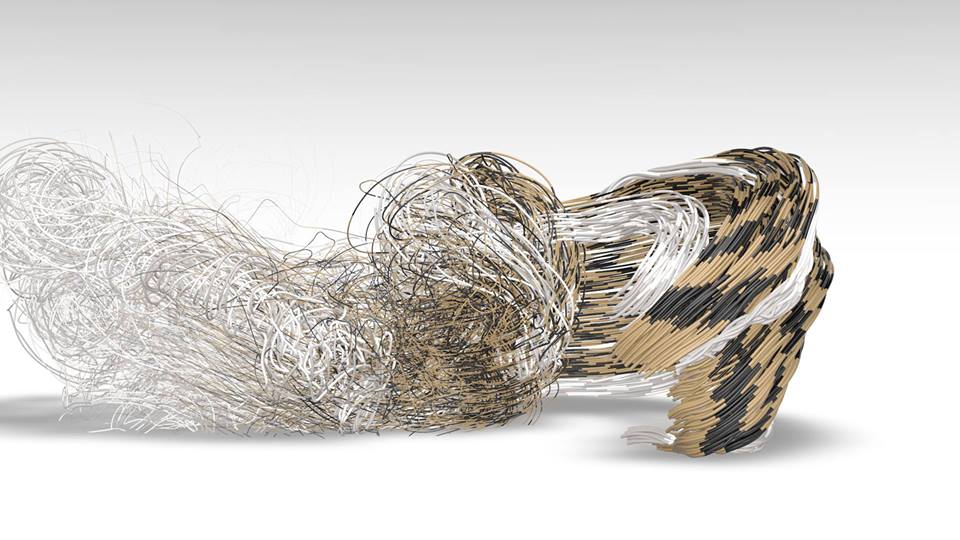
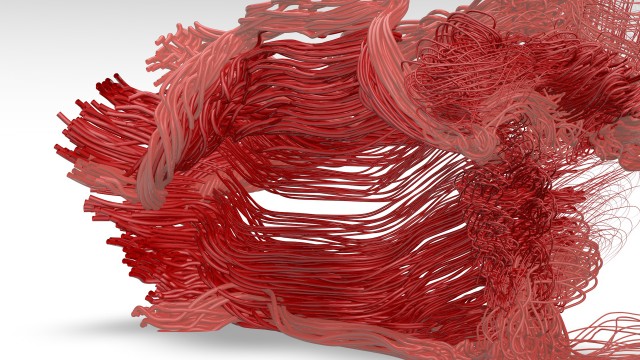
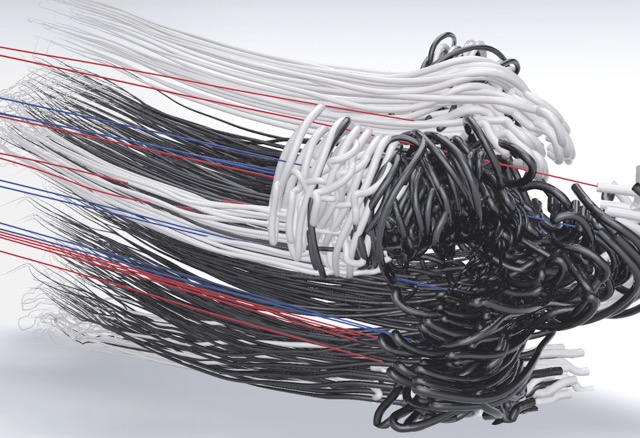
Reverse engineering, authorship and conservation in times of digital media
Frankfurt based artists Amin Weber presented parts of his work on the Motion Bank dance research project for The Forsythe Company. Weber approached the complex choreographic system that the practice of American choreographer Deborah Hay can be understood as by adapting her solo dance piece “No Time To Fly” as 3D animation. He reported of the steps taken and how not using a human body affected the process. Further he shared what working in this way meant to him and Deborah Hay and how his adaptation fits into the overall research process itself.
In the second part of the evening, Prof. Dr. Gerd Döben-Henisch introduced the “emerging mind project”. As a research project in the field of artificial intelligence it is set up as a system to produce artists along the way. To do so, environments are to be created that through tasks and interaction with the “external world” are to help minds emerge. Gerd Döben-Henisch explained the plan on how to set up this system, the interfaces it will have, and interaction it will allow. Trying to tackle two unsolved problems, namely creating an artificial mind and making computers create art, this raised quite a lot of questions that we discussed in the meeting.
Featured contributors
Artist talk by Eno Henze
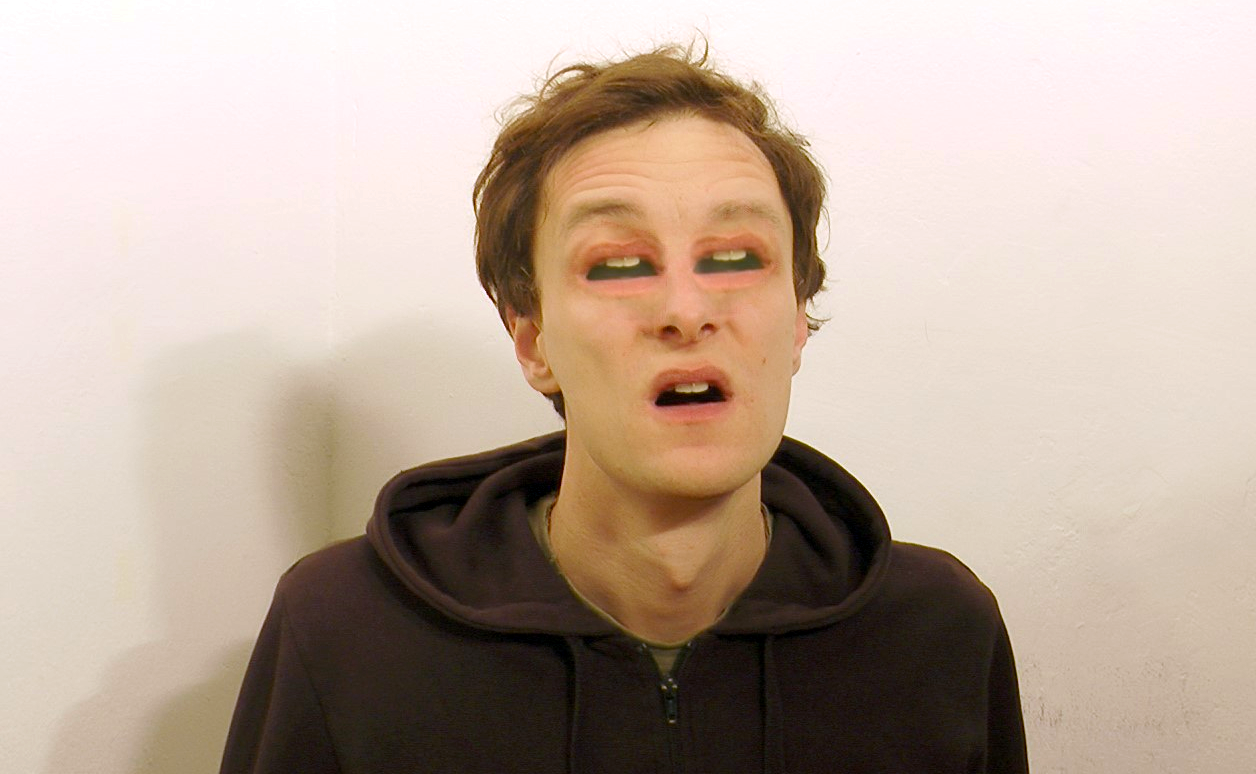
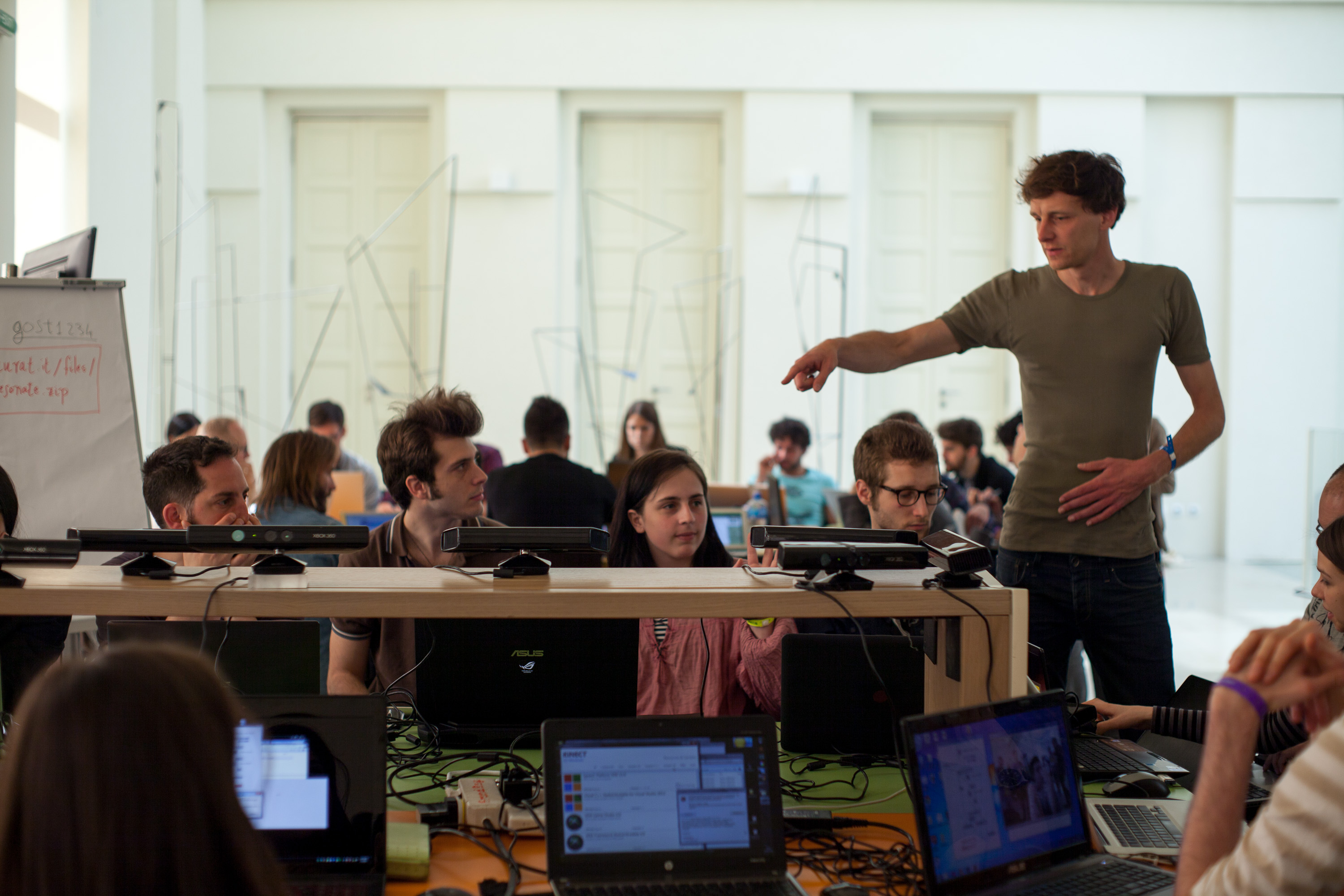
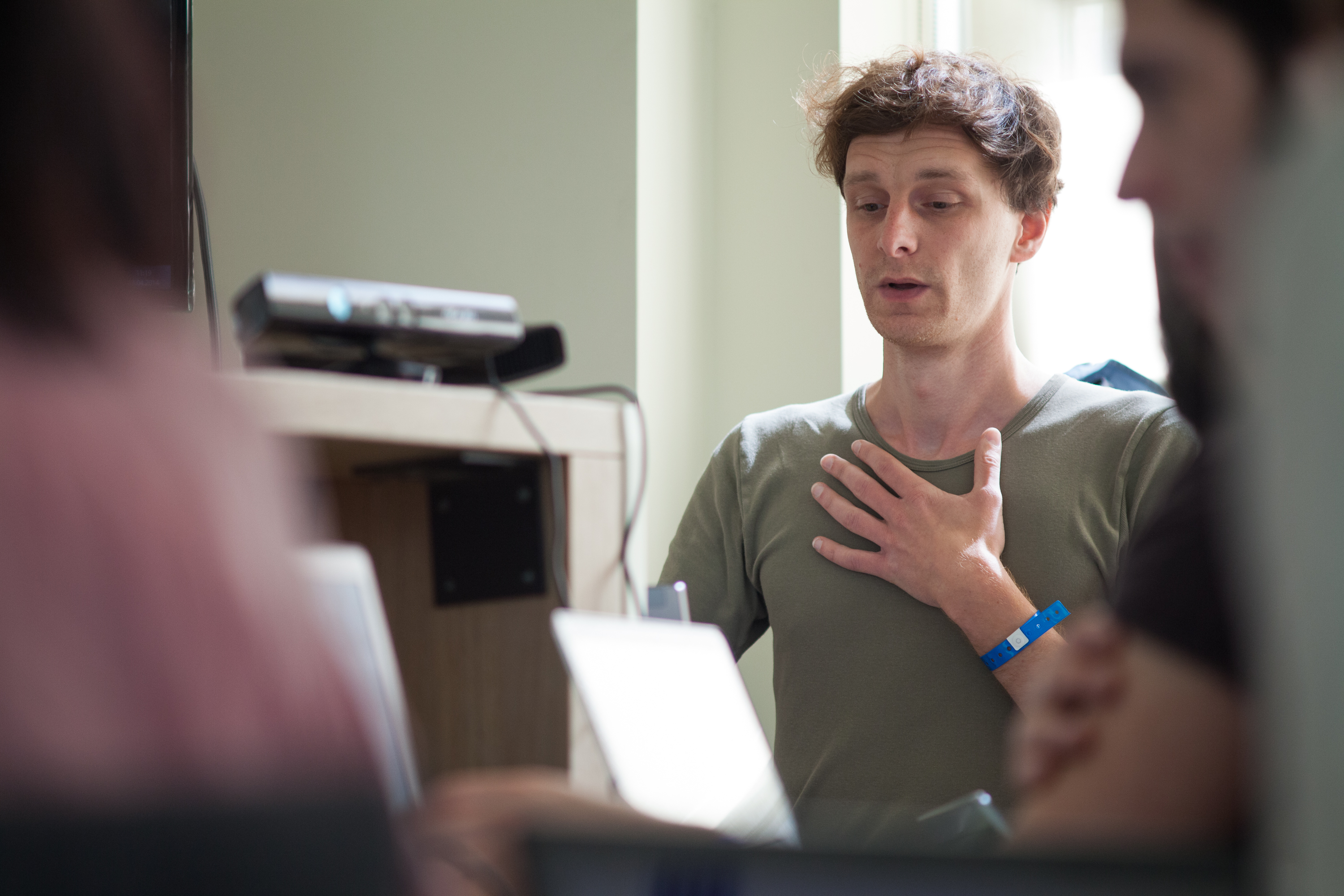
Workshop “Manupulating Faces” by Joreg and Woeishi Lean

Panel “Catalysts” with David Brüll (NODE Forum), Shane Walter (onedotzero), Jakob Bak/David Gauthier (CIID) and Angelique Spaninks (STRP/MU)
Who was there?
About B3
B3 is a festival with adjoining exhibition track and a campus. It is based on the Alliance of the Moving Image. This alliance joins ideas, and skills and presence to form a synergetic whole. This concentrated format makes makes an international Biennial possible.
The aim of B3 is to show in practice and real experience the great potential of the moving image in all areas of development, research, distribution, finance, and applications, based in the Rhine-Main area with its center in Frankfurt am Main.
‘Make. See. Discuss. The Rules.’
Talk by David Brüll & Sebastian Oschatz
David Brüll and Sebastian Oschatz hold a presentation ‘Make. See. Discuss. The Rules.’ to give a summary about the key topic of NODE13 and the usage of vvvv.


Visuals by Valérie-Françoise Vogt
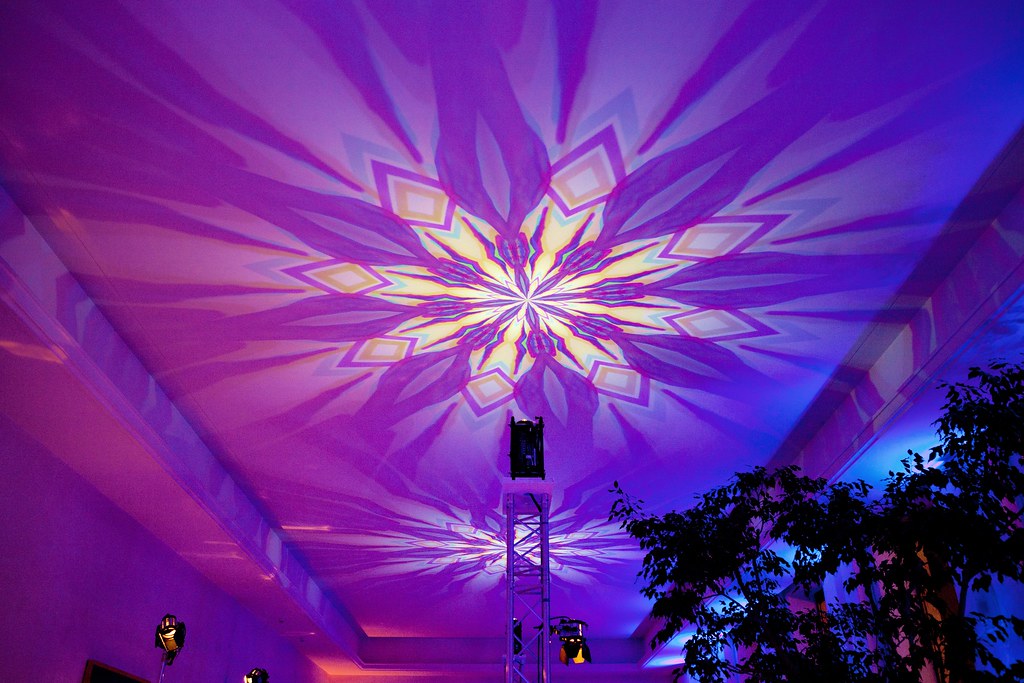
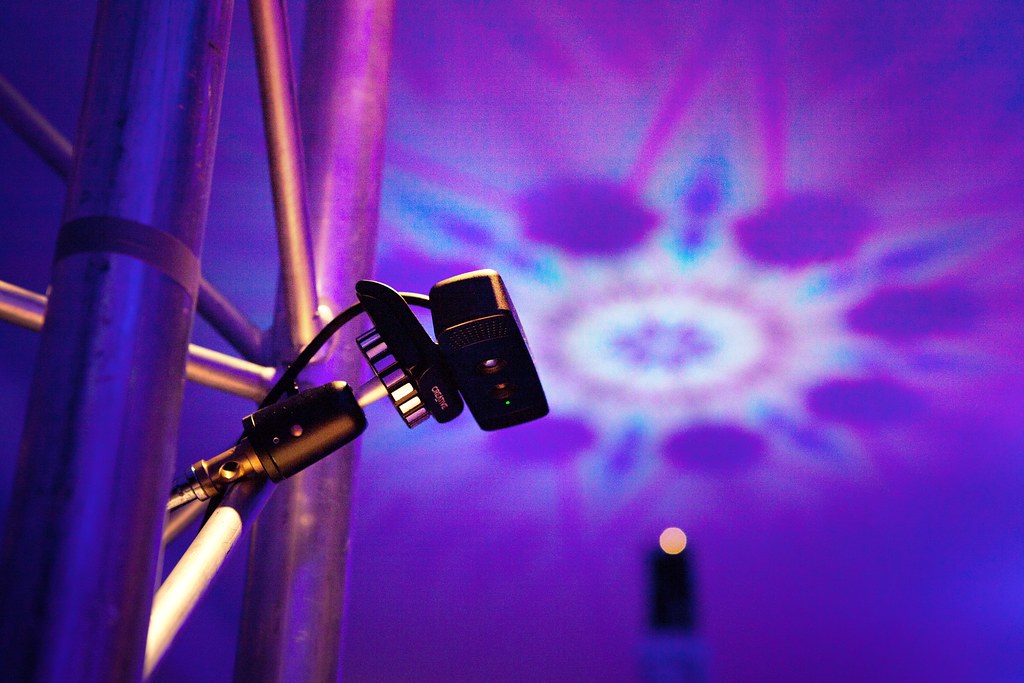
The NODE-team contributed some special vvvv animations for the Party at Hermann Josef Abs Saal, Frankfurt. In the entrance hall, three hemispherical projectors sponsored by satis&fy were used to spread the animated and interactive keyvisuals over the whole ceiling. Until the early hours V-Jane Valérie-Françoise Vogt enhanced the party with her live visuals.