Tehran, 20. September 2016 – Arriving at the beautiful kooshk residency was already an experience worth to dedicate an own article: driving to the heart of downtown Tehran, we find an oasis run by amazing hosts and a grey grumpy Persian cat called Gombat. The reason for her grumpiness is what makes us feel just the perfect atmosphere: It is a place for coming and going but leaving traces and it is proven by a gallery of not less than 20-30 international artists decorating the walls of the comfy kooshk living room. But what we are actually here for is a venture we are trying already for the second time: bringing together two artist who, at TADAEX, start a collaboration that will take them work on a project for the next year.

TADAEX2016 schedule
A fully packed TADAEX2016 schedule.
In conversation with Lilian and Simon.

TADAEX/NODE 2016/17 exchange

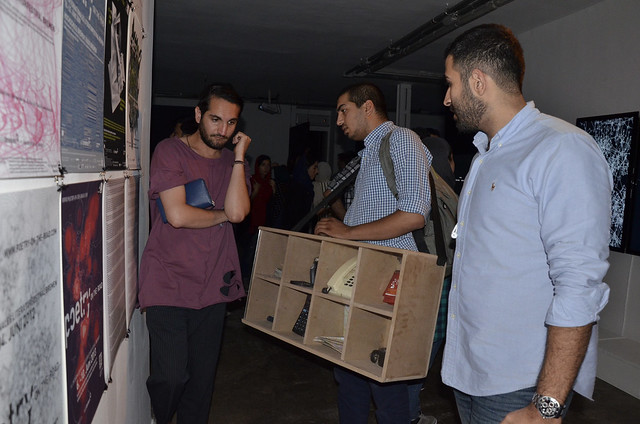
The ‘dumbphne’ performer visiting TADAEX.

Our resident artists Lilian Nejatpour and Simon Weckert had already been working for almost two weeks when the NODE team arrived in Tehran. Both not resident in Tehran, they tell us to have spent the days strolling through the streets, getting to know each other and the place that is hosting them for almost a month.

We find them right in the middle of the hassle to do a video shooting, an exercise that is quite packed with challenges in a place like Tehran. Permissions, it seems, are the most delicate thing to get. For which reason? We are not sure. It is not about privacy issues, that is clear.

The ‘dumbphne’

Simon and Lili are working on a video installation and a performance piece that will premiere at TADAEX 2016. Hanging out in the garden of kooshk, they are explaining their ideas and impressions, how they were connecting in the rush of this city, and how they finally found networked and mobile communication and how it is affecting our gestures and relationships globally a phenomenon they were mutually interested in. Their work ‘dumbphne’ is a performance and video piece that is playfully mimicking and exaggerating ways to use tools of a smartphone. The contact list turns into a proper book, the maps app is a classy old map of the Tehran streets, and instagram returns to his aesthetic source: a beautiful analog polaroid camera. The work is exhibited at TADAEX16 in a white cube that is, at the same time, visited by the performer with his ‘phone’ – or rather dumphne. Just as a normal gallery visitor, he looks at other works and takes a photo from time to time.

The ‘dumphne’ will be shown during NODE17, as well.


During the next days, we get to know great young artists and designers who are sharing their knowledge and are craving for the next source of inspiration. We meet curators that use digital means in the most pragmatic and clever ways to create opportunities of international exchange for their audiences. We take part in electronic AV performances that must be enjoyed while sitting. What we can feel is an undeniable quality of connection and complicity in the air – an atmosphere we are looking forward to dive deeper into…

Bonding with the Korintzky Brothers.
Bonding with the Korinsky brothers, two thirds of the ‘Korinsky Atelier für vertikale Flächen’ Sound Collective.

At NODE 17…

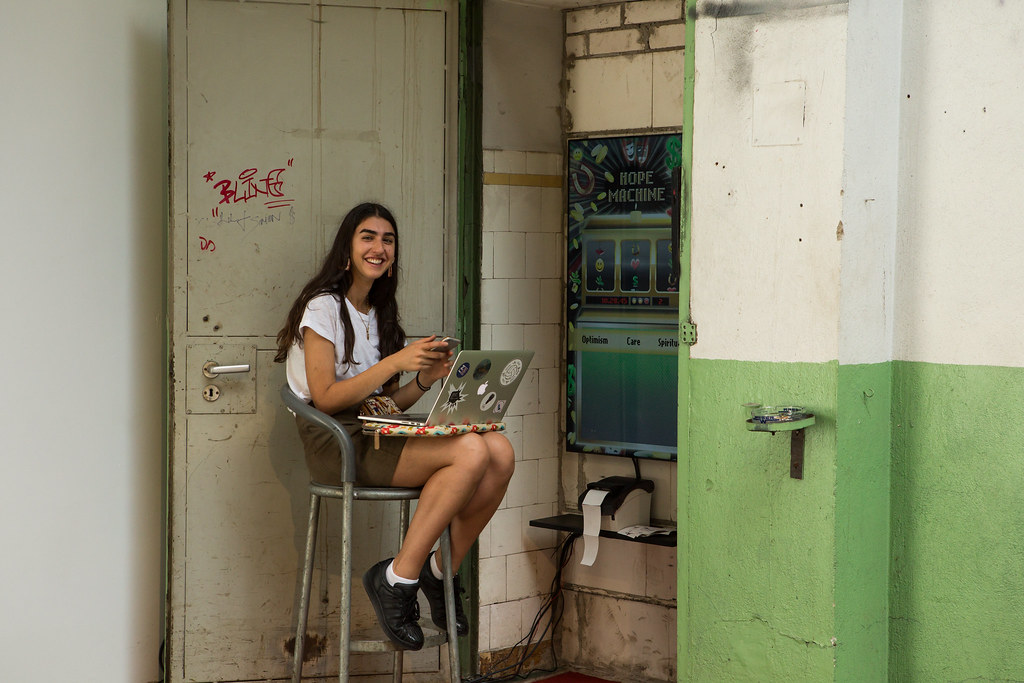
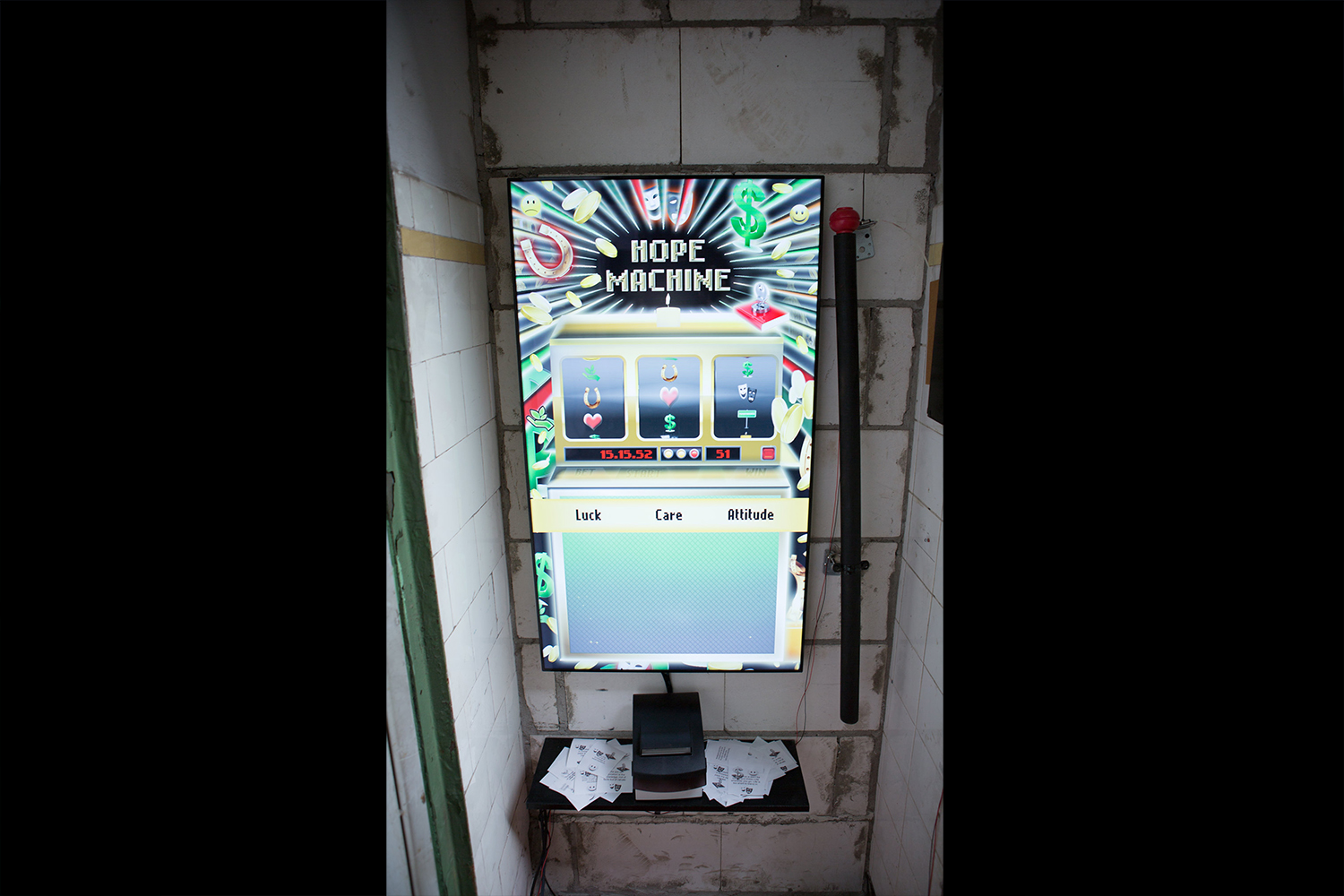
Lilian and Simon both continued their work process during the following months and developed a new work for the exhibition “Designing Hope” at NODE17 Forum for Digital Arts. The interactive installation ‘Hope Machine’ was presented at Naxoshalle and invited visitors to play with the fate and hopes in an uncanny way.
About the Artists


In collaboration with
Welcome to Shiraz

An Introduction by Artist Mohsen Zare


Shiraz, the town I grew up in, has been a wondrous place from times long bygone; full of gardens and bazaars and mystifying nights. A town of serene, fragrant springs, living here through the passage of days and seasons, your mind takes flight and frisks through the myriad of scents and scenes. There’s always enough reason to “catch” a color, or morph into a motif. Shiraz, has always mothered art and nurtured artists. No wonder she was chosen to host, from 1967 till 1977, the Shiraz-Persepolis Festival of Arts. The first, and still – even by contemporary standards – the most grandiose of such events in the Middle East. Despite going on for only 11 editions, its lingering effects could still be traced in today’s Iranian art scene. After the 1979 Islamic revolution though, it all changed. For everyone – Artists included. In a place as culturally rich as this, artistic talents naturally blossom en masse, but wither dry into their demise.


Few blossoms will grow into saplings, and fewer still will raise to be trees. There’s a constant contrast between the intense yearning for art making, and the lack of teachers, resources and drive. Every day, a few more enthusiasts will leave the scene, not being able to make ends meet through art. Shiraz’s art scene, or whatever’s left of it, is built on the backs of those who persevered in keeping it alive generation after generation. The fruit of the labors of Herculean men and women throughout history.
There are names in this town’s history which give shapes to notions like “artist”, and there are still a few who’re willing to live by that mantra, however harsh and unkind the circumstances. In talking about contemporary Shirazi art scene, the direct effect of the independent endeavors and endurance of a determined few is non-negligible. The curators of this show are the youngest amongst them.


Participating Artists


Zahra Abbasi
Marziye Alihoseini
Nahal Arian
Aghileh Ataei
Mozhdeh Azimi
Mohammad Bambayero
Maryam Dehbozorgi
Maryam Dian
Ali Forootan
Marziye Ghadimi
Mona Hadaegh
Mohamad Amin Haghpanah
Hanif Haghtalab
Ali Honarvar
Mahshid Mahbobifar
Parastoo Mohamadipour
Roya Mohseni

Haniye Mokarizadeh
Maryam Nargesi
Milad Noorani
Maryam Nowrozi
Soroosh Mohamadi Poyan
Elham Rajabi
Sedighe Saberi
Paria Shabani
Sara Shahosseini
Arefeh Shokraneh
Hasti Shokrzadeh
Sahar Taheri
Hojjat Vafayee
Mehrbod Farsi Zadeh
Mohsen Zare
Masoud Zare


Dar Al Hokoomeh

Through The Eyes of Curator Myriam Vanneschi


Mohsen Hazrati and Milad Forouzandeh founded Dar-al-Hokoomeh, a New Media art project in Shiraz, Iran, a year after graduating from Shiraz Art Institute with the vision of creating a space for emerging artistic practices.
Dar-al-Hokoomeh has hosted exhibitions, screenings, talks, lectures and workshops and has from its inception been at the forefront of the intersection of culture, art and technology within Iran and on an international level. Dar-al-Hokoomeh produces New Media events that are a chronological step in continuing an Iranian tradition of exploring media ranging from film to video and sound art. Not only through the exploration of the possibilities of New Media itself but also through combining this with an underlying depth, richness and humorous wit that is uniquely Shirazi. While outward looking and working on an international level, Dar-al-Hokoomeh is still firmly grounded in Shiraz, Iran and is inspired by the city’s rich history in the fields of literature and art.

With the DAH project, Mohsen and Milad have managed to create a thriving and vibrant New Media art scene in Shiraz that is able to compete with Tehran and other centers of New Media around the world.
Dar-al-Hokoomeh has invited curators and artists and have hosted a number of events relating to technology but simultaneously asks visitors online and IRL questions about art, identity and (geo)politics in a serious yet playful manner.

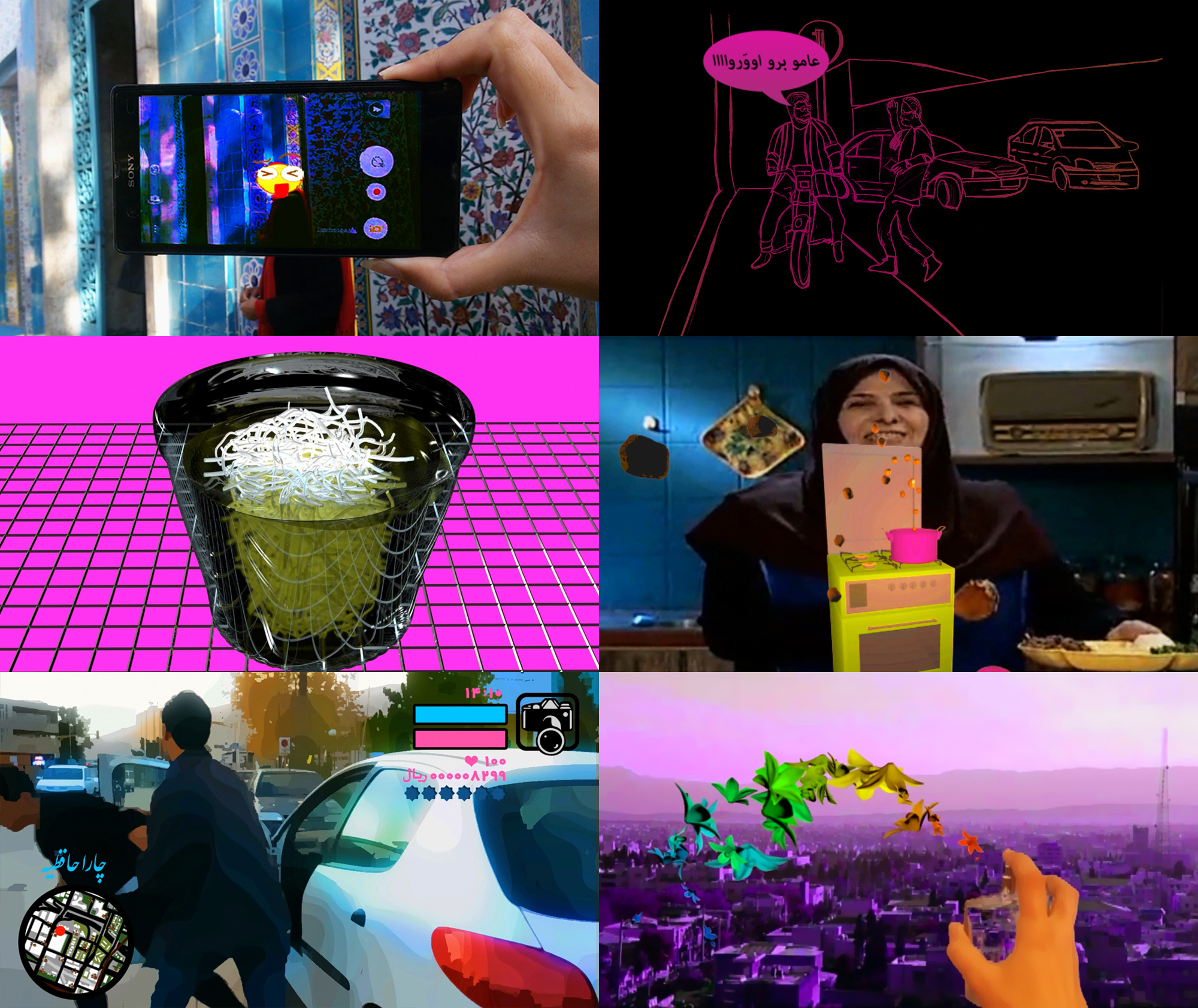
Recently they have investigated the very nature of New Media with BitRates in 2014, curated by Morehshin Allahyari and Mani Nilchiani with a segment called GifBites curated by Daniel Rourke and in 2015 I myself co-curated with Morehshin Allahyari a project titled AP<P>ART where we investigated the use of apps in art making and how more or less limited access informs a regional practice and aesthetic. After four years of non-profit activities, through their merits and achievements, DAH Project managed to attract an exclusive sponsor, in the form of the Folder Foundation.

About Folder Foundation


Folder Foundation was established in 2017 by Ali Khadivar, an art investor and entrepreneur. It is an art sponsorship initiative focused on supporting and promoting emerging artists who are mostly – but not exclusively – active in the field of digital and new media arts. It aims to provide them with the education and the equipment they need for further developing themselves as artists. Furthermore, it plans on establishing a location-independent community of and for such artists, to facilitate the exchange of ideas, experiences, and expertise between them. The foundation also aims to explore the financial possibilities of the digital art market, and to help and guide digital and new media artists towards establishing a sustainable career out of their craft.

The Folder Foundation is the first in a series of planned projects, initiatives, and organisations founded by Khadivar in order to explore artistic, social, cultural, educational, technological, and the financial possibilities and intricacies of the digital, post internet era. Upon completion, this inter-related network of organisations are supposed to feed off of, and support each other in order to find optimal ways of integrating digital based cultural and technological products into everyday human life.

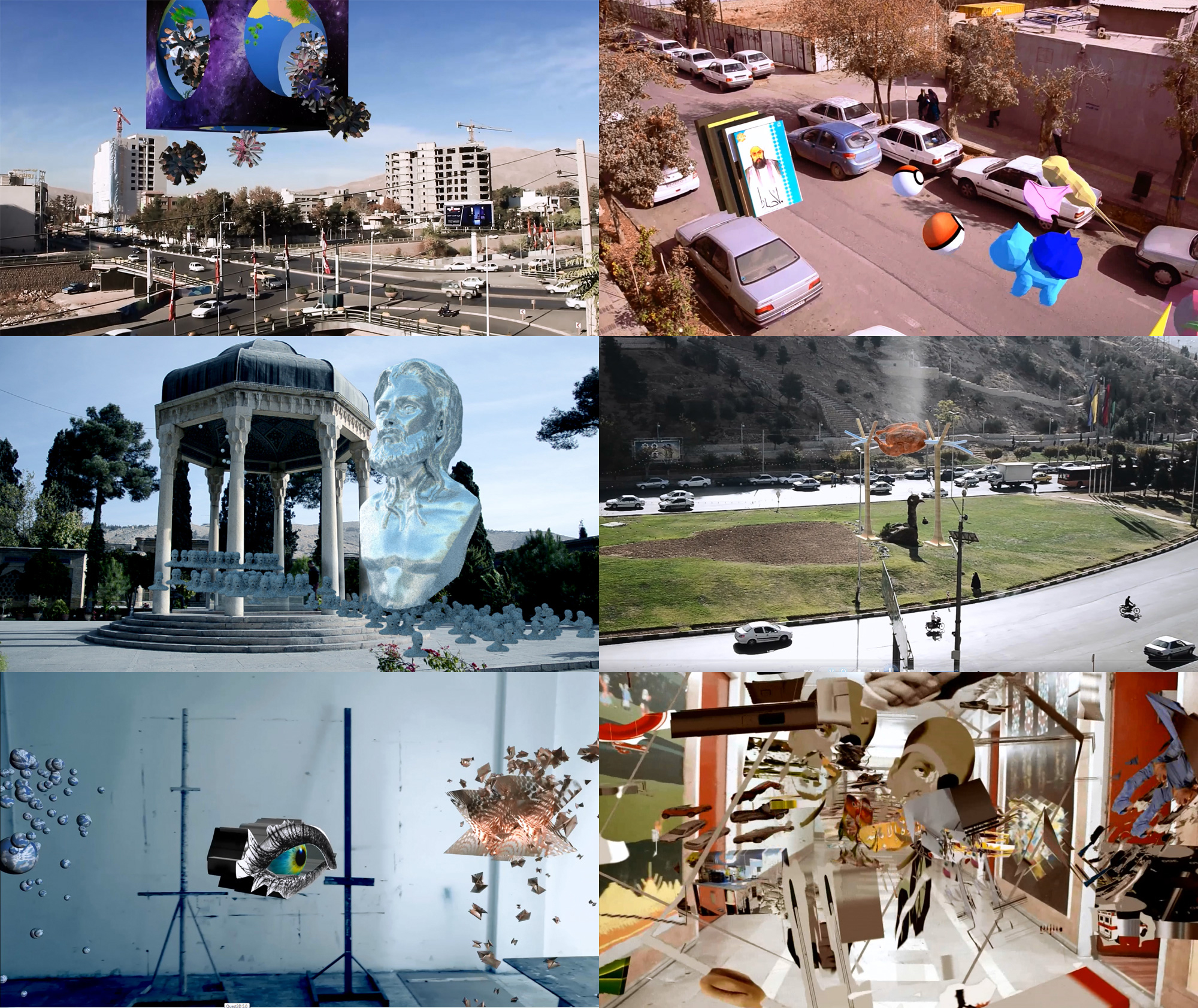
For its first major move towards attaining the goals described above, The Folder Foundation has sponsored this group show by emerging Iranian digital artists at NODE Forum For Digital Arts 2017, in collaboration with its main partner, the Dar al Hokoomeh Project.


The Makers and Artists


The NODE head responsible for making this happen:


Alexandra Waligorski

Curator, Team Digitale Welten

Arthistorian, Curator, Developer, Researcher