Introduction to computer vision
Making of Schéma
A preview to ShaderFX
Introduction to vvvv: For Coders
Networking Protocols
Introduction to vvvv: For Designers
The Great Report – An Attempt at Mapping Complexity
Toward More-Than-Human Futures
vvvv keynode
Refik Anadol & Friends
We Live in an Ocean of Air
Synthetic Being I
Synthetic Being II
Tehran, 20. September 2016 – Arriving at the beautiful kooshk residency was already an experience worth to dedicate an own article: driving to the heart of downtown Tehran, we find an oasis run by amazing hosts and a grey grumpy Persian cat called Gombat. The reason for her grumpiness is what makes us feel just the perfect atmosphere: It is a place for coming and going but leaving traces and it is proven by a gallery of not less than 20-30 international artists decorating the walls of the comfy kooshk living room. But what we are actually here for is a venture we are trying already for the second time: bringing together two artist who, at TADAEX, start a collaboration that will take them work on a project for the next year.


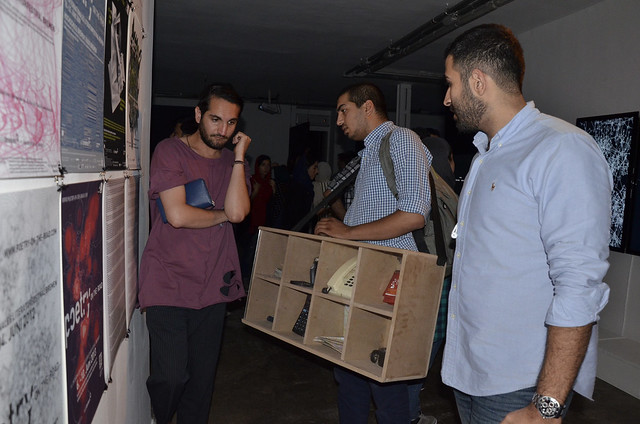
The ‘dumbphne’ performer visiting TADAEX.
Our resident artists Lilian Nejatpour and Simon Weckert had already been working for almost two weeks when the NODE team arrived in Tehran. Both not resident in Tehran, they tell us to have spent the days strolling through the streets, getting to know each other and the place that is hosting them for almost a month.
We find them right in the middle of the hassle to do a video shooting, an exercise that is quite packed with challenges in a place like Tehran. Permissions, it seems, are the most delicate thing to get. For which reason? We are not sure. It is not about privacy issues, that is clear.
The ‘dumbphne’
Simon and Lili are working on a video installation and a performance piece that will premiere at TADAEX 2016. Hanging out in the garden of kooshk, they are explaining their ideas and impressions, how they were connecting in the rush of this city, and how they finally found networked and mobile communication and how it is affecting our gestures and relationships globally a phenomenon they were mutually interested in. Their work ‘dumbphne’ is a performance and video piece that is playfully mimicking and exaggerating ways to use tools of a smartphone. The contact list turns into a proper book, the maps app is a classy old map of the Tehran streets, and instagram returns to his aesthetic source: a beautiful analog polaroid camera. The work is exhibited at TADAEX16 in a white cube that is, at the same time, visited by the performer with his ‘phone’ – or rather dumphne. Just as a normal gallery visitor, he looks at other works and takes a photo from time to time.
The ‘dumphne’ will be shown during NODE17, as well.
During the next days, we get to know great young artists and designers who are sharing their knowledge and are craving for the next source of inspiration. We meet curators that use digital means in the most pragmatic and clever ways to create opportunities of international exchange for their audiences. We take part in electronic AV performances that must be enjoyed while sitting. What we can feel is an undeniable quality of connection and complicity in the air – an atmosphere we are looking forward to dive deeper into…

At NODE 17…
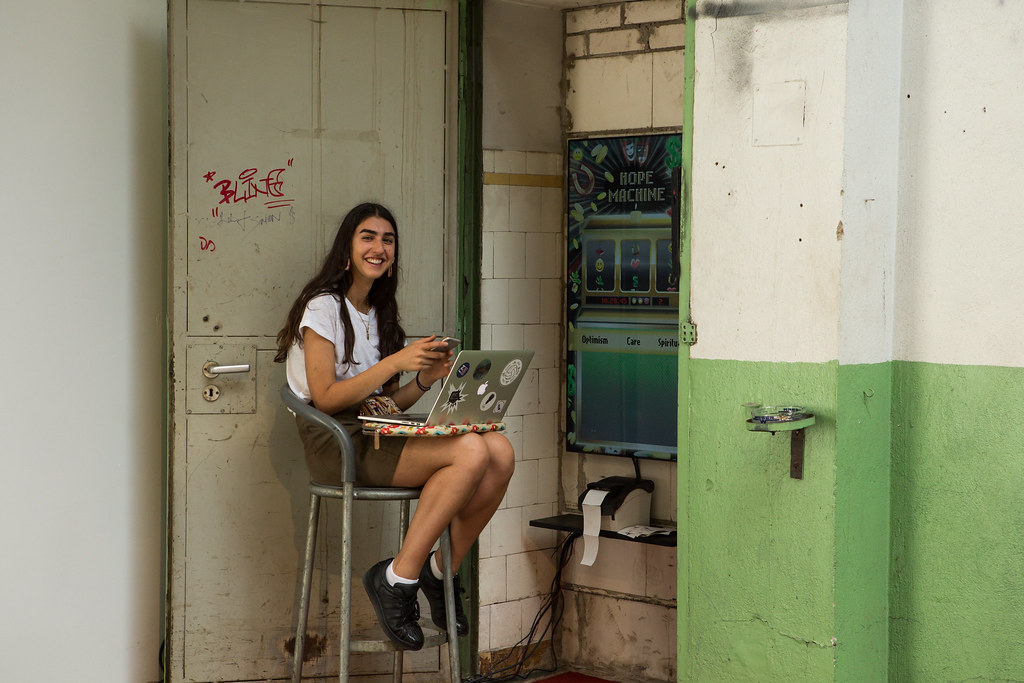
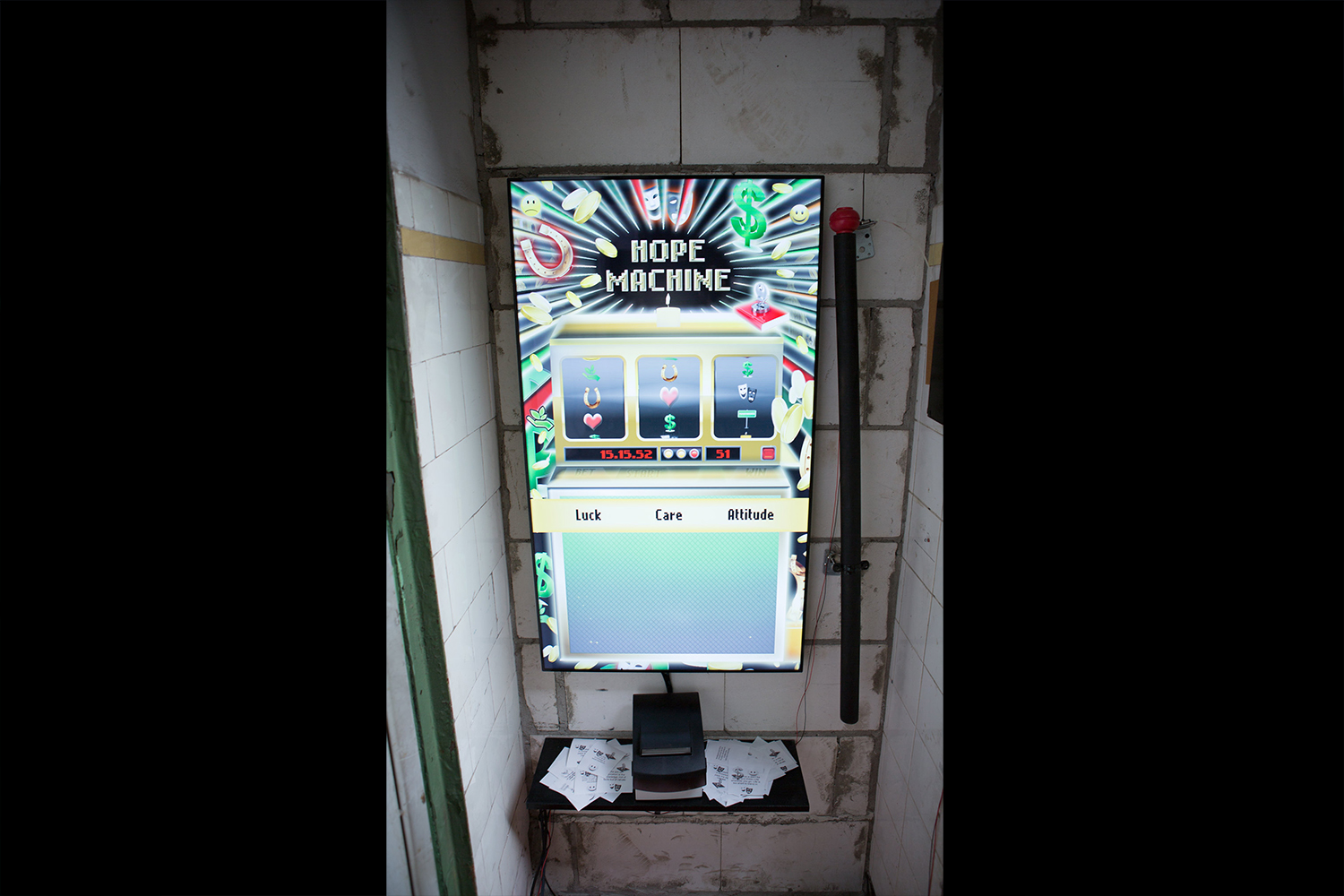
Lilian and Simon both continued their work process during the following months and developed a new work for the exhibition “Designing Hope” at NODE17 Forum for Digital Arts. The interactive installation ‘Hope Machine’ was presented at Naxoshalle and invited visitors to play with the fate and hopes in an uncanny way.
About the Artists
In collaboration with


Their first live performance centered on a wired sound park of found objects, including blenders mixed in automated percussion, razors and power tools effected, synthesized marbles, amplified water, a stroked radiator, sensorized referee stand, and destroyed TVs.Through unconventional inputs and outputs, The Hacking Orchestra enhances improvisation with hardware and software, creating circuits, translations, compositions, notations, and in the affordance of space, discovers live dramaturgy.
The Hacking Orchestra is a KISDproject, supervised by Prof. Nina Juric (Department of Image and Motion) and Prof. Andreas Muxel (Department of Interface Design). Participants: Kyosuke Ishii, Manuel Alejandro Juarez Saucedo, Martin Simpson, Stefanie Grawe
The Artists
Partner

In this “electronica melodrama” two performers examine music situated between medial immutability and transience. The performers have not only their voices as instruments at their disposal but gestural controllers and sensors as well; furthermore their attention, their gaze, and gestures, which they use to stage-manage and comment the musicality. Their lips and eyes test the measure of their emphasis on one other and on the audience, and watch for reactions in order to amplify them – until a good fairy’s ghost is evoked, playing Chinese whispers with all attendees.
Concept, Composition, Performance: Leo Hofmann
Performance: Filomena Krause
Outside Eye: Benjamin van Bebber
Sound Regie: Andi Otto
Photo by Eda Temucin
w/
Umfang | Discwoman
Leibniz (live) | Shtum, Rat Life Records
Elena Sizova | Der Zyklus, WéMè Records
Solaris | IFZ
Artwork: Stephan Idé & Aeneas Stankowski
find out more:
https://soundcloud.com/umfang
https://soundcloud.com/leibniz
https://soundcloud.com/lectra
https://soundcloud.com/solarisifz
http://antokhio.com/
https://soundcloud.com/staystaystaystay
Artists
Partners